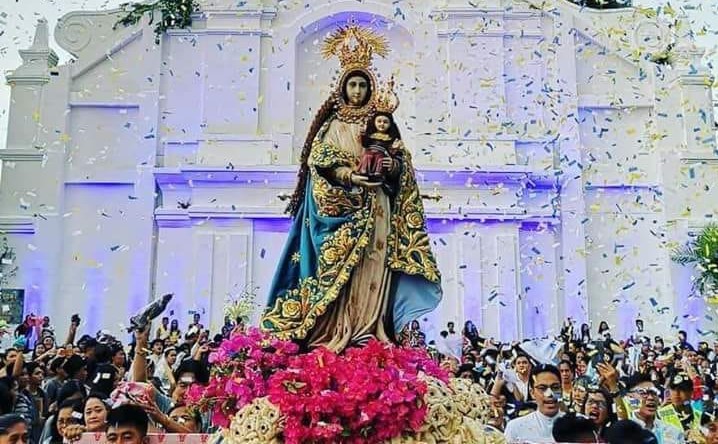
Since 1620, “La Milagrosa Virgen de Badoc” has been the Mediatrix of Grace for the people of Ilocos Norte
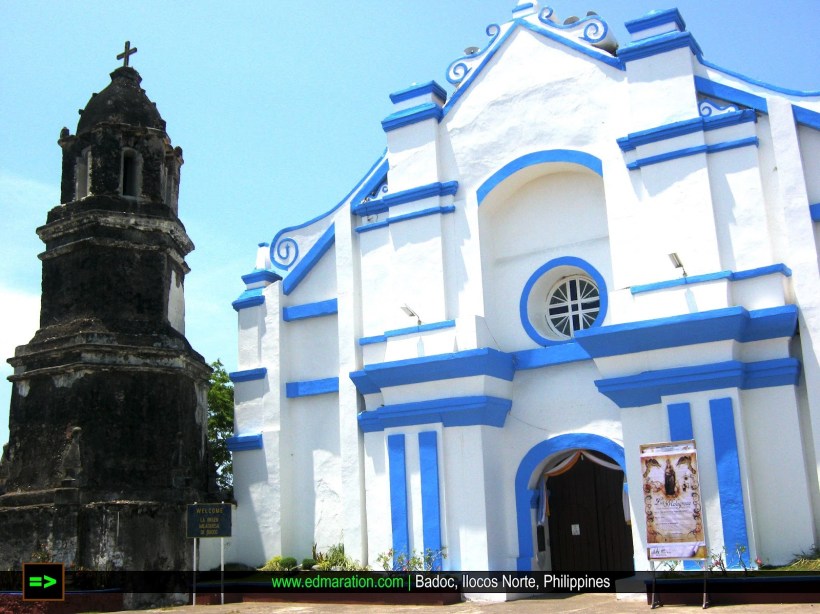
►The Vatican has approved a request from the Laoag Diocese to elevate the St. John the Baptist Parish Church — also known as “the Shrine of La Virgen de Milagrosa de Badoc, in Ilocos Norte” — to minor basilica status, a privilege granted by the Pope.
“The Congregation for Divine Worship and the Discipline of the Sacraments … very willingly bestows upon the parish church … the title and dignity of a Minor Basilica,” read the decree.
Elevation of St. John the Baptist Church in Badoc, Ilocos Norte — to a Minor Basilica on Feb. 5, 2019
According to canon law, no church building can be honored with the title of basilica unless by apostolic grant. Today, only the Pope through the Congregation for Divine Worship and the Discipline of the Sacraments is authorized to grant the decree.
►The 40-day preparation for the elevation of the Shrine of La Virgen Milagrosa de Badoc to a Minor Basilica in February has begun.
Laoag Bishop Renato Mayugba said it was important for the faithful “to be spiritually prepared for the big celebration.”
►The Vatican’s Congregation for Divine Worship and the Discipline of the Sacraments approved the request of the Diocese of Laoag to elevate the nearly 400-year-old Marian shrine to a Minor Basilica on November 30, 2018.
“We shall be celebrating the 400th anniversary of the presence of Our Lady of Badoc, the Japanese Madonna, in 2020. It was found floating on the sea in Barangay Dadalaquiten between Sinait, Ilocos Sur and Barangay Paguetpet in Badoc Ilocos Norte in 1620 with a large crucifix,” Bishop Mayugba said.
It is a symbol of the continuing mission of the Catholic Church to spread the Good News of the Lord and defend the faith especially in finding the image in conjunction with the persecution of Christians in Japan.
“With the elevation of the church in Badoc into a Minor Basilica and since the connection of Japan is very clear I feel a desire to share the faith back to Japan,” Bishop Mayugba said.
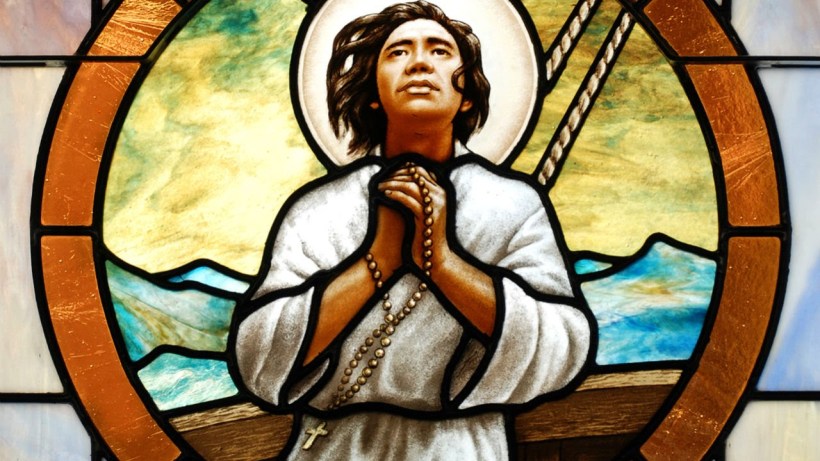
San Lorenzo Ruiz (c1600-1637) is the first canonized saint of the Philippines
◘ San Lorenzo Ruiz de Manila (c1600-1637) was a sacristan (altar-server) at the Dominican Church in Binondo, Manila (now renamed Minor Basilica of Saint Lorenzo Ruiz in Our Lady of the Most Holy Rosary Parish; this church was founded by Dominican priests in 1596 to serve Chinese converts to Christianity). Joining Dominican missionaries on a mission to Japan, Ruiz was tortured and killed in Nagasaki, Japan on September 28, 1637 with other missionaries — after he refused to abjure his Catholic faith. According to the record of his death, his last words were, “I am a Catholic and wholeheartedly do accept death for God. Had I a thousand lives, all these to Him I shall offer. Do with me as you please.”
Blessed Justo Ukon Takayama (1552-1615) — who died in exile in Manila on Feb. 3, 1615 — is venerated as the Philippine Church’s third “Blessed.” St. John the Baptist Parish Church in Badoc, Ilocos Norte is the first church outside the Manila Archdiocese to enshrine his altar-statue.
◘ Likewise, Blessed Justo Ukon Takayama (1552-1615), the celebrated Japanese Christian samurai who was considered a pillar of the Catholic faith in Japan, was deported to Manila – along with 350 other Christians after refusing to abjure their Catholic faith. Ukon settled in Intramuros, Manila – but died on February 3, 1615 — only 44 days after arriving in the country.
Official poster for two chapels—to be dedicated to two Martyrs: ● San Lorenzo Ruiz and ● Blessed Justo Takayama
Two Side Altars – to be dedicated to San Lorenzo (1637) and Blessed Takayama (1615)
Two side altars — in the Minor Basilica — will be simultaneously blessed with both San Lorenzo Ruiz and Blessed Justo Ukon Takayama recognized as the two enduring bridges that bind the Christians of the Philippines and Japan.
Two side altars—to be dedicated to two Martyrs: ● San Lorenzo Ruiz and ● Blessed Justo Takayama
On December 27, 2018, the Laoag Diocese launched a 40-day preparatory celebration in St. John the Baptist Parish as the Minor Basilica.
Bishop Mayugba said that spiritual preparation explains to devotees the meaning of the Minor Basilica — and its contrast to ordinary Churches.
“That is the catechetical, spiritual and pastoral preparation,” Bishop Mayugba said.
The Laoag Bishop invites devotees to participate in the celebration which will be held on February 5, 2019.
Laoag Bishop Renato Mayugba meets Pope Francis at the Vatican
The official start of the day’s celebrations will be at 9:00 AM, Tuesday, Feb. 5, 2019 – with the Papal Nuncio to the Philippines, Archbishop Gabriele Giordano Caccia, reading the Decree of Concession of the Vatican’s Congregation for Divine Worship and the Discipline of the Sacraments raising the St. John the Baptist Church in Badoc, Ilocos Norte to a Minor Basilica — after nearly four centuries dedicated to “La MilagrosaVirgen de Badoc.”
The Eucharistic Mass will be presided by Cotabato Archbishop Emeritus Orlando Beltran Cardinal Quevedo and Manila Archbishop Luis Antonio Cardinal Tagle — with Cardinal Tagle delivering the homily.
The installation of the side altar for Blessed Takayama will be made by Osaka Archbishop Thomas Aquinas Manyo Cardinal Maeda. The installation of San Lorenzo Ruiz will be by Cardinal Quevedo, assisted by Davao Archbishop Romulo Valles, president of the Catholic Bishops’ Conference of the Philippines (CBCP).◘
►THOUGH it is only a small patch of earth, Plaza Dilao was significant in the shared history of Philippine-Japanese relations (1593-2018):
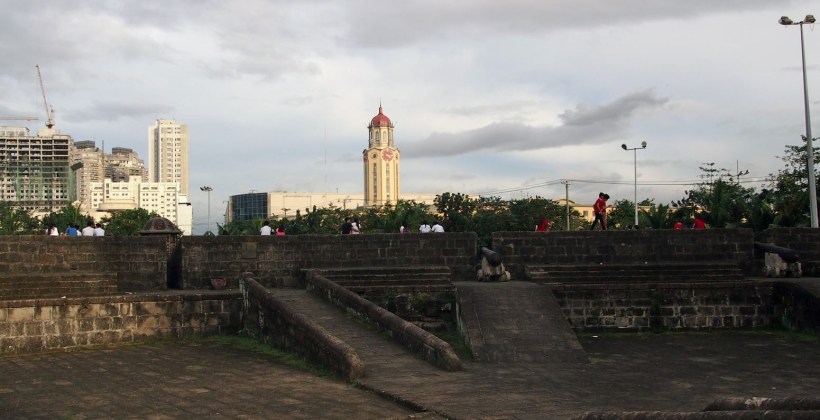
Baluarte de San Francisco de Dilao, Intramuros, Manila — Built in 1592 by the Spanish government to deter threats and invasion by Hideyoshi. Renovated in 1622. Restored by the Intramuros Administration after its desctruction during the Battle for Manila (Feb. 3-March 3, 1945)
1593 – It memorializes the Dilao of old, which was the first nihon-machi of the early Japanese. The old Dilao, which was originally located just outside Intramuros (at the site now occupied by the Manila City Hall) was established in 1593 by the Spanish colonial government as the first district for Japanese residents of Manila – merchants, mercenaries, sailors, castaways, and survivors of shipwrecks. The Japanese Christians among them were placed in the care of Franciscan missionaries.
“UNDER THE GUN” — Dilao was under eight cannons of the Baluarte de San Francisco de Dilao, Intramuros, Manila — to quell any possible uprisings by the Japanese population
1603 — The districts of Dilao, San Miguel and Bagumbayan are in flames because of the Chinese rebellion. The Spaniards were joined by Tagalog and Japanese fighters in quelling the uprising. The rebellion was then quelled by the Spaniards, together with the support of Filipinos and the Japanese in the settlement of Dilao. The Japanese especially showed no mercy in the repression. Altogether 20,000 Chinese were killed. In 1603, there was a large massacre of around 20,000 Chinese, mostly of Fujianese Hoklo descent. The location was in Manila’s Parian de los Sangleyes (the Chinese quarter). Most of the San Miguel district, including its chapel was destroyed during the Chinese uprising of 1603.
Cannon points directly at the Manila City Hall, attesting that the original site of the Japanese “nihon-machi” was the City Hall area
1611 – Manila Archbishop Diego Vázquez de Mercado (1533 – 1616; r. June 13, 1604- June 12, 1616) constituted the San Miguel parish and assigned it to the Jesuits.
1611 — Andrea Caro described Manila in 1611: “Chinese without number, Japanese, East Indians, people of Malacca and Java, a great many Portuguese, French, Dutch, Flemings, immigrants from Italian, Greek and Sicilian cities, all these in addition to the natives of various tongues, tribes and islands, and the Spaniards, both men and women.”
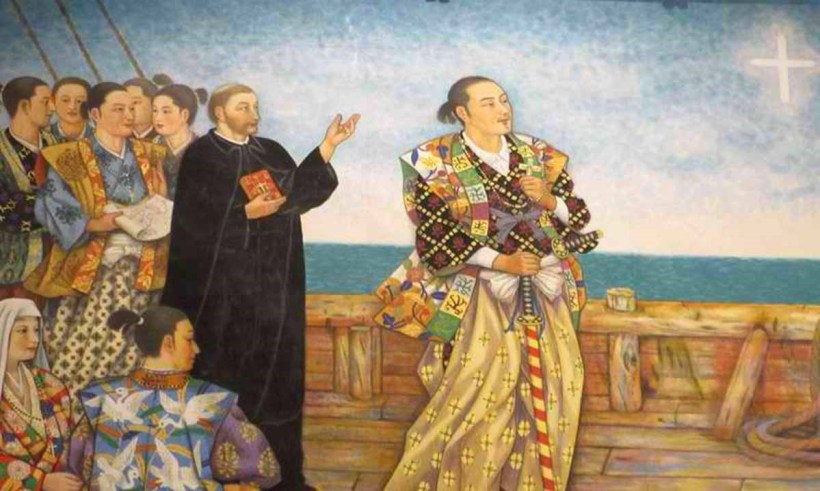
The exile boat of Lord Takayama was a Portuguese-captained multi-masted Chinese junk — with a Japanese and Chinese crew of some 30 sailors
1614 – It memorializes the “350 Christians” from Japan who rather than abjure their Catholic religion, came to live in Manila. In December 1613, the governor of Kyoto started drawing up a list of Christians to expel. The Nagasaki government – run by the anti-Christian bugyo (governor) Hasegawa Fujihiro Sahyoe (1568-1617) — also had a “passenger list” of those to be exiled, but in the scramble for berths to Macau and Manila, they lost track of who was going where. Then, there were clandestine debarkations at “Dos Caballos” islands in the middle of Nagasaki Bay. Then came “fake news” – of this or that noble (including Takayama’s wife, Justa Kuroda Takayama) falling overboard and drowning, meaning: Don’t look for them anymore! As a passenger manifest, the Nagasaki list (of which there are many versions) was useless. But the list definitely included 23 Jesuit missionaries (15 Japanese and eight Europeans, minus Fr. Antonio Francisco Critana, SJ, who died on board the exile ship) and 15 Jesuit dojuku (Japanese male catechists).
The precious Marian icon – “Our Lady of the Rosary” — more popularly known as “La Japona” which had accompanied the first Dominican missionaries to Satsuma in 1602 – was entrusted to the care of Dom Justo Ukon Takayama – on the exile voyage to Manila in 1614. “La Japona” continues to be enshrined at the Santo Domingo Priory in Quezon City, Philippines.
But the historian and statesman Yosaburo Takekoshi (1865-1950), writing in The Economic Aspects of the History of the Civilization of Japan (London: George Allen, 1930; Routledge: 2004) summarizes — without citing his source: “In all, there were 117 [nobles and missionaries – not counting the ship’s crew], and 200 students of theological schools” – which conforms with the generally-accepted ballpark figure of “350 Christian exiles” stated in Colin/Pastells.
In 1614, Manila welcomed “with a charity approaching veneration a fragment of the heroic church of Japan.” (Fr. Horacio de la Costa, SJ).
The first boat of Japanese exiles contained some 350 Christians who were banished for refusing to adjure their Catholic faith
◘◘◘ — Takayama’s group included his family – his wife Doña Justa Kuroda Takayama (who returned to Kanazawa before June 1616, with a bone relic of Takayama Ukon); a daughter, Lucia Yokoyama (wife of Yokoyama Daizen Yasuharu, 1590-1645, a high-ranked governor who remained in Kanazawa – in one Jesuit account, “at the explicit wish of Ukon”; but another Jesuit writes Yokoyama had apostatized “outwardly” to protect his position, greatly distressing Ukon who did not want his daughter Lucia to be living with “that apostate”); five (not three) grandchildren (aged 8-16), all surnamed Takayama, as they were children of Ukon’s son, Jujiro Takayama (d. 1608), and one nephew, Benedict Sandeyu.
◘◘◘ — Lord Juan Tocuan Naito (内藤 如安, 1550-1626), also known as Tadatoshi Naito, or Yukiyasu Naito, former lord of Kameyama and Yagi castles in Tanba, which he lost in 1573 for siding with Shogun Yoshiaki. During the Korean War, he fought under the command of Admiral Konishi Yukinaga; and served as Hideyoshi’s ambassador to the Ming Court in China (1594-1596) on account of his knowledge of Chinese characters. Though he was only two years older than Ukon, Naito was described in a Jesuit account as “already old and sickly.” He was accompanied by his wife, who outlived him; two sons, one of whom was identified as the samurai Thome Naito (who returned to Osaka in mid-1615 and was given command of 300 men at the epic Summer Campaign between Hideyori and Ieyasu), and Naito’s daughters. (The second son and a nephew were ordained priests in Manila; two daughters became Santa Clara nuns.) At the time of the expulsion, Lord Naito, described as “a distinguished soldier under Ieyasu,” and son Thome had been retainers of the Maeda clan in Kanazawa for 14 years. But they had criticized the severe anti-Christian measures of the Tokugawa Shogunate, so Ieyasu ordered their names added to the exile list.
◘◘◘ — Members of the first Japanese religious congregation for women, the Jesuit-chaplained Beatas de Meaco [Kyoto] or Miyako no Bikuni (Nuns of Kyoto, 1615-1656), led by Prioress Julia Naito (Lord Naito’s younger sister, and 14 other nuns, including Doña Mencia (1574-1641), second superior of the Beatas, after Mother Julia died in 1627; and Doña Tecla Ignacia (1579-1656), third superior of the Beatas, after Doña Mencia died. Other nuns include Doña Maria Iga; Doña Maria Muni (d. 1640, mother of Doña Tecla Ignacia); Doña Maria Park (a Korean noblewoman, c1572-1636); Doña Magdalena Nagashima, first cousin of Julia (c1577-1622), and Doña Luzia de la Cruz (1580-1656) — the last Japanese cloistered nun to die.
◘◘◘ — Mother Julia Naito had been widowed at 22, and became a Buddhist nun (later abbess of a Jodo-shu monastery.). In 1596, after hearing a sermon of Bro. Hoin Vicente Vilela (not to be confused with P. Gaspar Vilela, SJ), she received Baptism from Fr. Organtino, and took the name Julia. In 1606, she organized a women’s congregation devoted to catechetical work in Kyoto and environs which she called “Miyako no Bikuni” – under the care of Fr. Organtino and Fr. Pedro Morejon, SJ. By 1613, the Beatas had 18 nuns. At the start of the general persecution in 1614, Mother Julia hid the nine younger Beatas, while she and eight other well-born Beatas surrendered to authorities. They were subjected to the “tawarazume torture” wherein they were stripped naked, placed into old rice-bags tied tightly with rope, paraded around town, threatened to be brought to a brothel, then piled on top of each other on the banks of a river. This torture lasted nine days, but all the Beatas survived it without any of them apostatizing.
(This Japanese pioneering congregation preceded — by six years — the arrival of the Poor Clares (officially, the Order of Saint Clare) or the Spanish Clarissas, who arrived in Manila on August 5, 1621. The Spanish congregation of 10 nuns was led by Mother Jerónima de la Asunción (1555–1630) who was declared by the Vatican as a “Servant of God” in 1734. Since 1621, the Real Monasterio de Santa Clara (Royal Monastery of Saint Clare) has continually existed and still serves an active community of nuns.)
There were several dozen Japanese nobles, but their names have not surfaced yet. Those who have been identified were:
►Ukita Hisayasu (related to, but not a son of, Lord Ukita Hideie [1573-1655], member of The Council of Five Elders), who ruled from Okayama Castle over Bizen, Mimasaka, and part of Bitchu of provinces (with an estate of around 575,000 koku);
►and an unnamed Christian daughter of the multi-married Daimyo of Bungo, Dom Francisco ŌTOMO Sōrin.
The three underlined names are mentioned in “Mitsubo Kikigaki” – an archival document in Kanazawa Bibliotheca — as among 70 Japanese nobles, Christian knights allied with Takayama Ukon, exiled to Tsugaru region on April 13, 1614.
But Papinot (1910) identifies three names in BOLDFACE as Ukon’s companions-in-exile in Manila.
Yosaburo Takekoshi (1930) likewise lists three names with asterisks (***) as Manila exiles.
(For both “Mitsubo Kikigaki” and Papinot / Yosaburo to be right, the three Tsugaru exiles – all faithful knights of Takayama for at least 12 years — would have hurried to join up with Takayama at Nagasaki for the voyage to Manila.)
The faithful Christian “ronin” accompanied Takayama on the exile voyage to Manila
◘◘◘ — Another fellow-exile was Diego Yuki Ryosetsu (a seminarian ordained as a Jesuit priest in Manila in 1615, and martyred in “the pit” in Osaka in 1635. He has come to recent recognition by being among 188 Japanese martyrs beatified in Nagasaki in 2008.
Blessed Diego Yuki Ryosetsu (1574-Feb. 16, 1636) arrived in Manila with Lord Justo Ukon Takayama’s exile group of 350 Japanese Christian deportees on Dec. 21, 1614. He completed his seminary studies at the San Jose Seminary (now relocated in Loyola Heights, Quezon City), where he was ordained. Knowing full well the risks of martyrdom, he returned to Japan to profess his ministry.
1615 — The Jesuit Church and the Jesuit residence in San Miguel district becomes a center for Japanese Christians.
1615-1626 – Lord Juan Tocuan Naito became Regidor of Dilao (first nihon-machi established in 1593) and San Miguel (second nihon-machi populated by Kirishitan exiles in 1614), collecting tributes for the Manila government from residents in these districts. Naito worked at translating Chinese medical books (which he collected when he was an envoy in Peking) into Japanese, and applied his knowledge to cure the sick.
1616 — A Spaniard kills a Japanese in a brawl. A Japanese crowd started arming themselves, demanding justice. But Fr. Pedro de Montes, SJ, rector of the Jesuit College, manages to calm the Japanese.
1617 – The Japanese of Dilao take up arms against the government. After this was quelled, the government decided to raze Dilao and disperse its 1,500 residents to other suburbs.
1620 – There are 2,000 Japanese residents in Manila.
1621 – A new group of Japanese nobles, numbering some 200, arrive in Manila.
1621 — Archbishop Miguel Garcia Serrano, OESA (r. 1620-1629), reported to the king of Spain in 1621 that there are “more than 1,500 [Japanese] Christians … in the parochial church of Santiago, and in the villages of Dilao and San Miguel, which are suburbs of Manila, and in the port of Cavite” — but he pointed out that this was not a fixed population “because they are a people who go to and fro” to Japan.
1623 — Archbishop Garcia Serrano receives a request from Nagasaki Christians to establish a Japanese College in Manila. Gov. Alonso Fajardo sets aside a lot for this college. In 1636, the plan to build a seminary for Japanese seminarians was again considered, but dropped as an unnecessary aggravation to the Tokugawa Shogunate.
1626 — This is the year Lord Naito died in San Miguel. Balete ceased to be an independent municipality and was reincorporated into the town of Dilao. Thus, Balete has been forgotten, and it is Dilao — now known as Paco — that has remained through the years.
1627 – Prioress Julia Naito dies.
1632 — The third Tokugawa Shogun of Japan – Tokugawa Iemitsu (1604-1651; r. 1623-1651) — loaded 134 “converted Christians” on a ship and sent them to the Spanish authorities in Manila with a letter saying: “If it is converts you want, begin with these.” They turned out to be lepers, who soon spread the disease in the Philippines. Time Magazine remarked (in “Religion: Lepers”): “Before 1632 there was no leprosy in the Philippines.” (But the Franciscan archivist, Fr. Pedro Ruano, OFM, disputes this; Franciscan doctors encountered cases of leprosy in Manila soon after their arrival in 1578, when they established – in keeping with their healing ministry — a medical center and dispensary in Intramuros run by the lay Brother, Juan Clemente, OFM. The Franciscan dispensary had run for 56 years when Iemitsu’s lepers arrived.
The Japanese lepers became a part of Dilao history when the Franciscans sheltered them in a large compound they built in Dilao with government support, which they called San Lazaro – after St. Lazarus, patron saint for lepers. It was only in 1785 – 151 years later — that the leprosarium was transferred to Hacienda Mayhaligue, the site that the present-day San Lazaro Hospital, now a Special National Hospital Medical Center for Infectious Diseases, occupies in Rizal Avenue, Santa Cruz district, Manila.
1635 – A new shipload of Japanese Christians arrives from Japan.
1637 –The number of Japanese tribute payers was listed as 218 which, at an average of four members per household, translated to some 872 Japanese residents. This conforms to a report of the Japanese in Cambodia that the size of the Japanese community in Manila was some 800 in 1637. (Seiichi Iwao, Early Japanese Settlers in the Philippines.)
1638 — After the Shimabara Rebellion in 1637, many Japanese were deported to Macau or to the Spanish Philippines. Many Macanese and Japanese Mestizos are the mixed-race descendants of the deported Japanese Catholics. Some 400 were officially deported by the government to Macau and Manila, but thousands of Japanese were pressured into moving voluntarily. “About 10,000 Macanese and 3,000 Japanese were moved to Manila.”
1645 – A grievous earthquake shakes Manila (on Nov. 30) – lasting as long as four times the recital of the “Credo.” The Jesuit church and Residence at San Miguel collapses. In Manila, damage was severe: it almost “crumbled” ten newly constructed churches in the capital, residential villas and other buildings. An estimated number of 600 Spanish people were killed, and about 3,000 Spanish were injured
1656 — The last Japanese cloistered nun – Doña Luzia de la Cruz — of the Beatas de Miyako (“Miyako no Bikuni“) dies four decades after their arrival in Manila. This marks the end of the cloistered Japanese nunnery as they had refused to admit Japanese or Tagalog additions to their ranks, including a Naito daughter who instead joined the Clarissas, and after she died, was replaced by another Naito relative.
1656 – San Miguel is listed as having 140 families, representing 560 people.
1720 — Fulminating against the expected ordination of Filipino priests, Fray Gaspar de San Agustin warns against the chastisement “of flourishing Christian communities by placing them in the hands of natives ordained to the priesthood.” His objection: Filipinos’ pride “will be aggravated by their elevation to a sublime state; their avarice with the increased opportunities of pretoing on others; their sloth with their never having to work for a living; and their vanity with the adulation that they will necessarily seek; desiring to be served by those whom in another state in life they would have to respect and obey….”
c1724 — First Filipino is admitted to the priesthood.
1762 – As the Japanese population dwindled, the Dilao settlement moved to the site now occupied by the Paco Railroad Station and Plaza Dilao, according to Felix de Huerta. Medina notes: “As part of the war preparations against the British in 1762, the authorities moved Paco [as Dilao was then more popularly known] and located it between the city moat and the Pasig. The site constituted the land occupied before by the Bateria de Carlos IV, lying between Baluarte de Dilao and Puerta de Recoletos.”
1768 – San Miguel (the Kirishitan district) burns down. It is relocated near the Malacanan area.
1791 — The three towns of Dilao, Santiago and Pena de Francia were amalgamated into a new town collectively known as San Fernando de Dilao. The popular name — Dilao — now referred to the expanded area.
1898 – Plaza Dilao was the area proposed by the Philippine Historical Markers’ Committee in 1943 to commemorate the 25 Japanese volunteers who assisted Filipinos in their uprising against Spain in 1898.
1945 — During the Liberation of Manila (February 3 – March 3, 1945), 300 Japanese soldiers lost their lives defending the Paco Railway Station and the adjoining Plaza Dilao, to prevent American troops from advancing to South Manila. The battle for the Paco Railway Station changed hands three times during the fighting from Feb. 7-11, 1945. The battle ended on Feb. 11, 1945 – Kigensetsu Day (National Foundation Day of Japan) — when the 37th Infantry Division finally annihilated the Japanese defenders. The citations for the four Medals of Honor awarded to American soldiers confirmed the number of Japanese soldiers killed: 300.
Other World War II numbers:
◘◘◘ — More Than One Million Filipinos Dead: The Japanese Occupation cost the Philippines over 1,000,000 lives of its 17 million pre-war population.
◘◘◘ — Over 100,000 Filipinos Dead During Liberation Battle: The Battle for Manila (February 3 to March 3, 1945) caused over 100,000 deaths.
◘◘◘ — Death Toll of the Philippine Church: During the Japanese Occupation of the Philippines (1942-1945), the Philippine Church lost one Bishop; 62 secular clergy; 88 religious priests; nine chaplains; four deacons and scholastics; 37 Brothers and 86 Sisters. Total war casualties: 289.
(In Manila, the Church of Japan lost two priests: ● Fr. Joseph Isamu Ikeda, who studied at the UST Interdiocesan Seminary and was ordained a priest on Jan. 5, 1945 by Manila Archbishop Michael J. O’Doherty – d. March or April, 1945; and ● Fr. Haruo Sugiyama [a priest impressed as a soldier into the Japanese military], who was waylaid on P. Noval St., Sampaloc, after visiting Father Ikeda at the UST Seminary – d. Jan. 10, 1945.
If major seminarians are included in the death count, as is the practice in the Philippine Church — then the Don Bosco seminarians, ● Sebastian Masaji Maki <d. Nov. 1944>, and ● John Shigeru Nishimura <d. Feb. 1945> would also be listed among the Japanese Church’s war deaths.)
Takayama Memorial at Plaza Dilao in 1977
1977 – Plaza Dilao memorializes the checkered Philippine-Japanese history that has spanned four centuries – with Lord Justus Takayama Ukon (高山右近) as the best exemplar of friendship and amity between the two peoples.
Plaza Dilao — as renovated in 2019
1992 – The Takayama Memorial is declared a National Monument by the National Historical Commission (predecessor of the National Historical Commission of the Philippines (NCHP).#
Compiled by Dr. Ernesto A. de Pedro
Takayama Trustee
►All three statues have been enshrined in Philippine churches — for the past 400 years!
The anti-Christian persecutions in Japan were the most systematic and most sustained in the history of the Catholic Church – during the Tokugawa Shogunate (1603-1867).
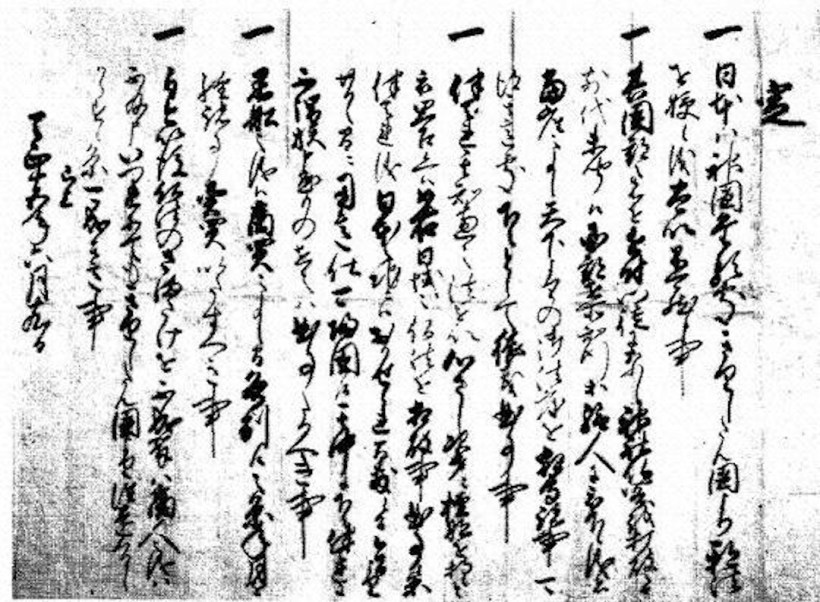
►On Jan. 27, 1614, the Tokugawa Shogun ordered the expulsion of the all Christian missionaries and the destruction of the churches.
Most Catholic daimyo apostatized, and forced their subjects to do so, although a few would not renounce the religion and were deported from the country — as in the case of Lord Justo Ukon Takayama (高山右近, 1552-1615) and Lord Joan Tadatoshi Naitō (内藤 如安, died 1626). A brutal campaign of persecution followed, with thousands across Kyushu and other parts of Japan killed, tortured, or forced to renounce their religion.
Missionaries who remained and went into hiding, or who secretly entered Japan, continued to minister all over the country, from Hokkaido to Kyushu. This continued until 1637 for the Dominicans and the Augustinians, around 1640 for the Franciscans, and around 1644 for the Jesuits.
►1614 – the year Lord Justo Ukon Takayama led the first boatload of 350 asylum-seekers to Manila – was very grim for Christians in Japan. The Tokugawa Shogun had decreed that all Daimyos renounce their adherence to the Christian religion, the destruction of all Christian places of worship, and the expulsion of all Christian missionaries, foreign or Japan-born.
The tortures were inventive. Some Christians were branded with hot irons, dipped repeatedly in boiling water and crucified. Believers were also straddled with straw coats made of grass then set on fire.
The total eradication of the “evil foreign religion” was the goal.
Shogun Decrees Destruction of All Churches in Nagasaki
All churches were destroyed – burned, dismantled, or re-purposed.
►With the evangelical efforts of Jesuits (since 1549), followed by Franciscans (1593), Dominicans (1602), and Augustinians (1602) from Manila, there were many Christian communities in Japan — in Kyoto, Osaka, Sakai and in the Noto Peninsula.
But the most numbers could be found in Nagasaki. In 1614, Nagasaki had 14 churches and shrines: ● Todos os Santos; ● Santa Maria; ● Santo Domingo; ● San Francisco; ● San Antonio; ● Santiago (with hospital); ● San Pedro; ● Santa Isabel (Misericordia headquarters); ● San Agustin; ● Church of the Assumption and Colegio of San Pablo; ● Episcopal See and Seminary for diocesan priests; ● San João Baptista and hospital of San Lazaro; ● Nishizaka martyrdom site (since 1597); and ● San Lazaro. (Source: Gonoi 2006, 45)
Lord Justo Takayama led the first group of 350 refugees deported from Japan – arriving in Manila on Dec. 21, 1614 – with the statue of Our Lady of the Holy Rosary from the Santo Domingo Church of Nagasaki.
Three Religious Icons Survived
►Originally brought to Japan from Manila, the three religious statues — ● Santo Cristo (brought by Augustinian missionaries to Japan in 1612) ● Our Lady of the Holy Rosary (“La Japona” – brought by the first Dominican missionaries to Satsuma in 1602) and ● Our Lady of Good Counsel (Mater boni consilii), brought by Augustinians, 1612) — found their way back to the Philippines, and have been continuously enshrined in three Catholic churches for the past 400 years.
Except for the Dominican “La Japona,” which was squired by Lord Justo Ukon Takayama during his exile voyage to Manila from Nov. 8 – Dec. 21, 1614, the two other religious statues were off-floated in a single crate that was fished out of the seas off Badoc, Ilocos Norte in 1620.#
One Large Crate Had Floated Off Badoc, Ilocos Norte in 1620
►In 1620, a wooden crate was fished off the sea by Ilocano fisherfolk off the coast between Barangay Dadalaquiten of Sinait and Barangay Paguetpet of Badoc, both towns in Ylocos Province. (It was only on February 2, 1818 that Ylocos was split into two provinces: Ilocos Norte and Ilocos Sur. Badoc was in Ilocos Norte while Sinait was in Ilocos Sur.
When the fisherfolk opened the crate, they were surprised to find a statue of the Black Nazarene and a Marian image holding the Christ-Child. Being devout Catholics, they immediately considered the statues as a God-send. They took this as a sign from Providence – a gift from Heaven.
As legend has it, the fishermen from Sinait were unable to move the statue of the Blessed Virgin Mary, but had no difficulty moving the statue of the Black Nazarene.
Similarly, the fishermen from Badoc were able to move the statue of the Blessed Virgin Mary (later called the “La Virgen Milagrosa”) with ease, though they were unable to carry the image of the Black Nazarene.
The two groups brought the statues to their respective towns, where they became their towns’ patron saints.
Since 1620, miracles have been attributed to the two images, but these reports were anecdotal — without any ecclesiastical inquiries to verify individual testimonies. Since their discovery, numerous miracles were attributed to both in Sinait and Badoc, including the end of an epidemic in the capital town of Vigan, Ilocos Sur when the images were brought there for devotion.
◘ Santo Cristo (enshrined at San Agustin Church, Nagasaki in 1612)
►While the two Augustinian icons could have been brought out of Japan through the Takayama exile boat in 1614, they were not.
The crate they were shipped in was fished off the coast of Badoc in 1620. The Kuroshio Current (黒潮 , “くろしお“) – or “Japan Current” — that brought the crate to Badoc would have taken less than a year to reach Luzon.
The statue of Santo Cristo was of a crucified Black Nazarene – much like the Mexico-sourced icon at the Minor Basilica of the Black Nazarene, in Quiapo, Manila. It is now enshrined at the Sanctuary of the Miraculous Statue of the Black Nazarene (“El Santo Cristo Milagroso”), fondly called by its residents as “Apo Lakay.”
The statue of Santo Cristo has been enshrined at the San Nicolas de Tolentino Parish Church in Sinait, Ilocos Sur since 1620“Apo Lakay” draws fervent devotees to Sinait, Ilocos Sur — from all Ilocano provinces.
◘ Our Lady of the Holy Rosary (“La Japona”)
The first recorded religious icon to leave Japan was “La Japona” which was “extracted” in 1614 from the Dominican Church of Our Lady of the Rosary. This was entrusted to Lord Takayama (who had a cabin) by fellow-deportee Dominican missionaries who were berthed on the top deck, open to the elements.
►The Santo Domingo Church was established in Nagasaki in 1612 – after the “La Japona” was first brought in 1602 by pioneering Dominican missionaries to Satsuma, Japan, where the Marian icon was enshrined at various mission stations the Dominicans built – until it found a home in Nagasaki.
First Marian icon that had been saved was the Lady of the Holy Rosary, later short-named “La Japona,” which was extracted from the Santo Domingo Church (est. 1612) in Nagasaki, and brought to Manila in the safekeeping of Lord Justo Ukon Takayama (whose family had rented a cabin).Osaka Archbishop (now Cardinal) Thomas Aquinas Manyo Maeda made a pilgrimage to “La Japona” in April 2018, with two groups of parishioners from Osaka.
The celebrated Marian image is enshrined at the Santo Domingo Church in Quezon City. Today, the Santo Domingo Priory enshrines three iterations of Our Lady of the Holy Rosary. To differentiate the three Marian statues, all called Our Lady of the Holy Rosary, they are short-named ◘ La Naval, ◘ La Mexicana, and ◘ La Japona — (NOT “La Japonesa.”)
◘ Our Lady of Good Counsel — Now “La Virgen Milagrosa”
►The “La Virgen Milagrosa” is enshrined at the Badoc Church — St. John the Baptist Parish Church (est. 1591) – which was once a chapel under the jurisdiction of Sinait. It was formally recognized as a parish only in 1714 with St. John the Baptist as patron saint.
In Badoc, the atmosphere of grace from the presence of the Virgin and her Child, has earned for her the title of “La Virgin Milagrosa” — the “Miraculous Virgin.” This has been crowned by Catholic Bishops in 1980, and was granted a Canonical coronation by Pope Francis in May 31, 2018.
What the image looks now – her raiment, her locks, her crown – is certainly not the same as when found in 1620, as – across the centuries — devotees offer new raiment and add precious stones for prayers granted. These precious stones are offerings from the faithful, not only of Badoc, but of the entire province of Ilocos Norte.
Where Did the Statues Come From?
►After an earlier failed effort in 1607, Fr. Hernando Ayala, OSA, succeeded in establishing San Agustin Church in Nagasaki in 1612 in what is today modern Furodomo-machi. The church was named St. Augustine Church and designated as the headquarters of the Ordo SanctiAugustini (OSA). The church — which was under the care of the Third Order of St. Augustine Brotherhood of the Cincture — served a parish community of over 4,000 families with 10,000 individuals, many of whom joined the Third Order and the Archconfraternity of the Cincture that Fr. Hernando introduced and organized.
One particular devotional practice connected with the Augustinian Order is the veneration of the Blessed Virgin under the title of “Mother of Good Counsel” (Mater Boni Consilii). In all countries where they have missions, the Augustinians encourage confraternities to spread devotion to this Marian devotion. Our Lady of Good Counsel’s feast day is celebrated on April 26.
In 1614, did the Augustinians hold on to their religious icons – in the hope of better days to come?
But then around 1617, persecutions of Christians intensified. The Augustinian, Fr. Ferdinand of Saint Joseph, along with Andrew Yoshida, a catechist who worked with him, were beheaded in 1617. With no churches or convents, whatever missionary effort became an underground ministry. (During the 35 years of the Order’s presence, 24 friars were martyred, and counting only those whose names are known, 57 members of the Third Order and 47 members of the Archconfraternity of the Cincture shed their blood for Christ.)
Maybe it was time for the Augustinians-in-hiding in “underground missions” to ship out the two religious icons to safer harbors?
Archival Account
The earliest extant chronicle on the origin and discovery of these religious artifacts is reportedly in the 1764 “Chronicle of Fray Pedro de Vivar, OSA” – written in Europe 140 years after the event — archived at the Augustinian Archives in Valladolid, Spain. (It has not been ascertained yet whether Fr. De Vivar’s account supports the speculation that the two icons, now in Ilocos, were originally from Nagasaki. But, as Agustinians continued to work in Japan till 1637, it is possible that some mission reports reached OSA headquarters.)
But Fr. Ericson Josué, historian and archivist of the diocese of Laoag, now has a copy of the tract. In time, we will know what, if any, the 1764 “Chronicle of Fray Pedro de Vivar, OSA” says on the subject of Santo Cristo and Our Lady of Good Counsel.
The Badoc Church
St. John the Baptist Parish Church — shrine of “La Virgen Milagrosa” in Badoc, Ilocos Norte.“La Virgen Milagrosa de Badoc” inside the St. John the Baptist Parish Church in Badoc.
Canonical Coronation
►Following the issuance of decree on Dec. 6, 2017 by the Vatican Congregation for Divine Worship and Discipline of the Sacraments, Cardinal Robert Sarah, its Prefect, granted “La Virgen Milagrosa de Badoc,” patroness of Ilocos Norte, the privilege of being crowned as mandated by papal authority.
In the Run -Up to the Coronation
►Across the years, as devotion grew, the Badoc parishioners introduced a “La Virgen Milagrosa fluvial parade” in waters around the La Virgen Milagrosa Cove – where the crate was reportedly found.
Devotees from the province would first attend the Concelebrated Mass at St. John the Baptist Church in Badoc and after the Mass, the image of Blessed Virgin Mary traveled in the shoreline of La Virgen Milagrosa Cove.
Traditionally, both the Mayor and the Parish Priest escort La Virgen Milagrosa in her banca, while, provincial officials joined in their respective fishing boats.
Parish priest and Badoc Mayor — in banca carrying “La Virgen Milagrosa de Badoc.”In some years, La Virgen Milagrosa is paraded alone in her banca.
Shoreside spectators united by praying the Holy Rosary while the fluvial procession sailed ’round the La Virgen Milagrosa Cove.
Coronation
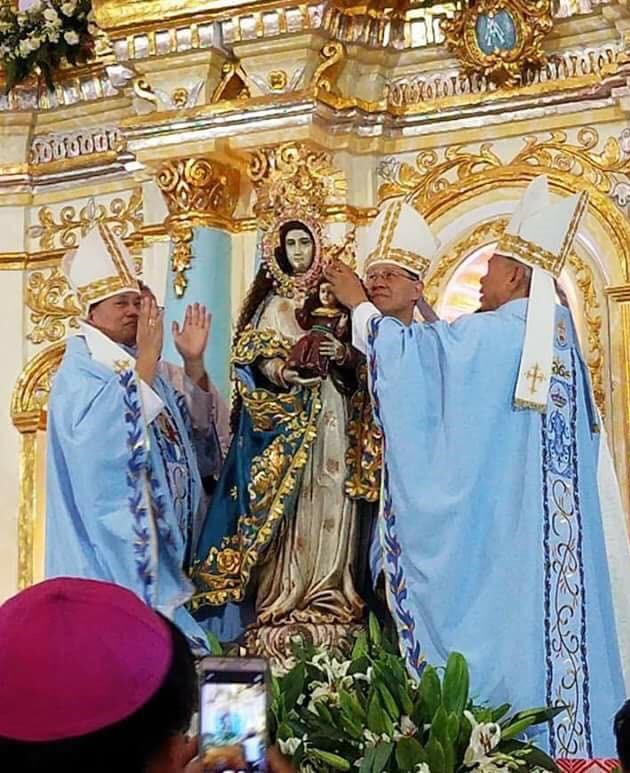
►On Thursday, May 31, 2018. Manila Cardinal Luis Antonio Tagle — “in the name and by the authority of the Holy Father, Pope Francis” — crowned the Marian image of “La Virgen Milagrosa de Badoc” in her shrine at St. John the Baptist Parish Church in Badoc. He was assisted by Cotabato Cardinal Orlando Quevedo and Laoag Bishop Renato Mayugba.
Cardinal Tagle, on behalf of Pope Francis, presided at the Canonical Coronation of “La Virgen Milagrosa de Badoc,” assisted by Cardinal Quevedo and Bishop Mayugba.
Many bishops and a large number of priests were joined by thousands of devotees, from Ilocos Norte and the neighboring provinces of Ilocos Sur, Abra, La Union, Cagayan, Isabela and Batanes.
Cardinal Quevedo’s Homily
►Cardinal Quevedo delivered the homily. The Cotabato Cardinal, whose family originally came from Sarrat, Ilocos Norte, said that these sacred images are believed to have come from the persecuted Christians in Japan who had jettisoned these religious artifacts to the sea to prevent their threatened desecration – leaving it to the “Kurushio” to bring the crate to Luzon.
The Cotabato Cardinal, who had previously been seen sent to Japan as Papal Legate to install a bronze statue of San Lorenzo Ruiz in Nakamachi Church in Nagasaki, recalled the martyrs of Japan’s anti-Christian persecution, particularly Blessed Justo Ukon Takayama (1552-1615) and St. Lorenzo Ruíz (1600-1637) – both regarded as stalwarts of the Martyr Church of Japan.
He concluded his homily with a challenge that, like these two venerated martyrs, the faithful should follow “La Virgen Milgrosa” who stands beneath the cross of “Santo Cristo Milagroso.”
Significant Coronation Date
The date chosen for the Canonical Coronation was May 31, 2018, Feast of the Visitation. Ilocano devotees were asked to reflect on the theme of the event: “Exultavit in Gaudio!” – Leap for Joy! from Lk. 1:41: “Upon Mary’s visitation to Elizabeth, the child John the Baptist ‘in utero’ (in the womb), leaped for joy.”
The chosen theme was inspired by the fact that the Lady of Badoc is also called, “Cause of Our Joy,” while the patron saint of the town of Badoc is St. John the Baptist. Hence, doing the coronation on the Feast of the Visitation is very fitting.
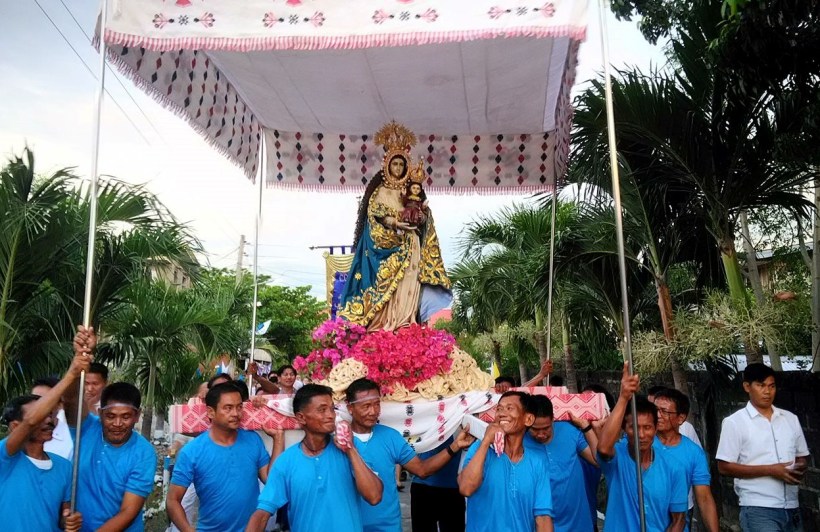
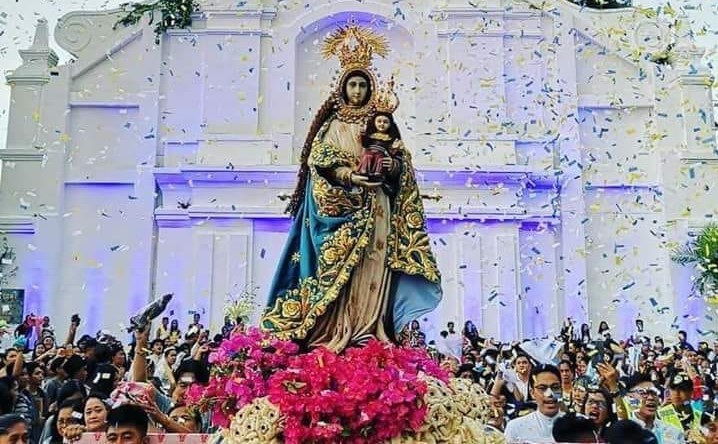
The culminating day was marked by the Concelebrated Mass and Coronation with a procession of “Virgen Milagrosa” around the main streets of Badoc accompanied by thousands of devotees who were recipients of her powerful intercession.
Procession through the principal streets of Badoc, Ilocos Norte
‘To Crown Mary is to Love the Poor’
In his address of thanksgiving, Bishop Renato Mayugba of Laoag said that “crowning our Mother and our Queen with diadems finds its fulfillment and meaning through extending our help to the poor and the needy and particularly to those in the peripheries … to crown Mary is to love the poor.”#
”La Virgen Milagrosa de Badoc” in front of St. John the Baptist Church in Badoc.
►(CNA/EWTN News) — A Christian scroll found in a Japanese museum is believed to be from the earliest days of Christianity in the country, researchers have said.
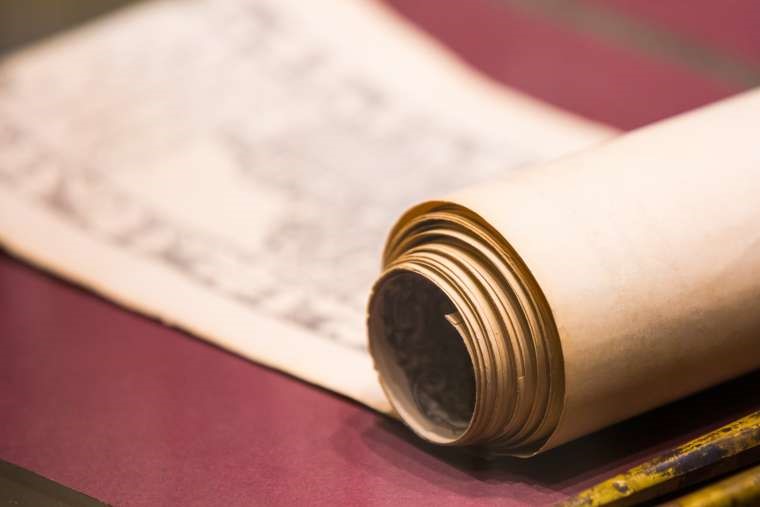
The scroll measures about 10.5 feet long and about nine inches high, and depicts 15 scenes from the passion, death, and resurrection of Jesus. The pictures include religious figures wearing traditional Japanese garments, and Latin prayers are spelled out in Japanese phonetic letters throughout the scroll.
The scroll — [done with China ink on a scroll made of Japanese “washi” paper] — was discovered at Sawada Miki Kinenkan Museum in the town of Oiso, Kanagawa Prefecture, near Tokyo, which collects historical Christian items.
Rare scroll — with Latin prayers
According to Japanese newspaper The Mainichi, an inscription on the scroll reads “1592 years since His Birth,” leading historians to believe that this was the year the scroll was created. Carbon dating has dated the scroll as having been created prior to the year 1633, the museum said.
If this dating is accurate, the scroll would be from a period of cruel and violent persecution of Christians in Japan.
Christianity arrived to the islands of Japan when St. Francis Xavier came to the country in 1549, though it is possible that Nestorian Christians had arrived at the islands in the 400s, only to retreat some years later.
Francis Xavier and his Jesuit missionaries evangelized and baptized many Japanese, sometimes converting whole provinces to Christianity.
By the 1580s, there were more than 200,000 Christians in Japan, including several influential leaders who had converted. But in 1587, the Imperial Regent (“Kampaku”), Toyotomi Hideyoshi (豊臣 秀吉, 1537-1598) commanded all Jesuit missionaries to leave the country within six months.
Hideyoshi’s “Edict of expulsion of the Christian Padres” (吉利支丹伴天連追放令), 1587.
Many missionaries remained in secret, but a time of intense anti-Christian persecution had begun. Christian converts were tortured by burning or flaying of their skin until they renounced their faith. If they refused to renounce, they were usually put to death by burning, beheading, or crucifixion.
Most Europeans were banned from the island at the time, for fear they would try to convert the Japanese to Christianity. In 1642, five Jesuits landed in Japan, but were soon discovered and killed. The Christian faith was prohibited throughout Japan until 1871, when the Japanese people were granted freedom of religion.
The scroll discovered at the museum is one of few Christian artifacts from Japan, as most were destroyed after the faith was banned in 1612.
Osamu Inoue, head of the Yokohama History Museum and one of the people who studied the artifact, said the pictures were likely created in response to the rapid growth of the Christian faith in Japan after the arrival of St. Francis Xavier.
“Ordinary people perhaps drew such pictures on papers because the material was inexpensive and (authentic) religious items were in short supply due to a rapid growth of the follower population,” he told The Mainichi.
The work depicts 15 scenes relating to Jesus Christ and the Virgin Mary, including the Annunciation and the Pentecost. The painting also bears some writing. An analysis shows it is Latin prayers that someone transcribed from a verbal form.
The scroll is now on display at the at Sawada Miki Kinenkan Museum in the town of Oiso, in Kanagawa Prefecture.
The history of Christianity in Japan has recently received new attention, with the U.N. recognizing several places of Christian importance in Japan as UNESCO World Heritage sites, and with the 2017 beatification of Justo Takayama Ukon (高山右近), a Catholic samurai and martyr.#
►These martyrs — 42 Japanese Saints and 393 Beati (Blessed) — represent the largest batch of martyrs in any single nation in the last 400 years.
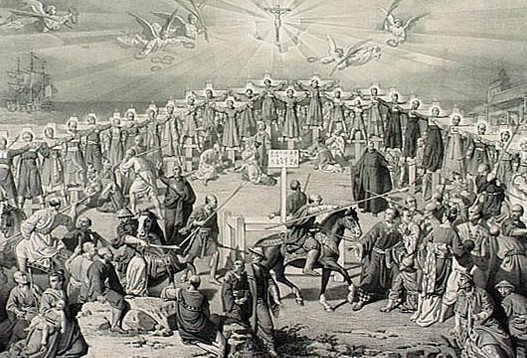
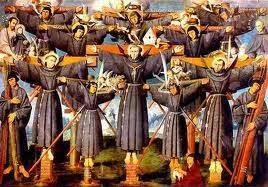
The 26 Martyrs of Nagasaki were the first group of Christians to be crucified – and lanced — in a grim parody of Jesus Christ’s sacrifice at Calvary
Japan’s martyrs were processed by the Congregation for the Causes of Saints (CCS) — in only four batches:
◘ The 26 Martyrs of Nagasaki (martyred 1597; beatified 1627; canonized 1862).
This first group includes St. Pedro Bautista (1542-1597), former Superior of all Franciscans in the Philippines and founder of the Franciscan Monastery at San Francisco del Monte, Manila — before he was sent to Japan in May 1593 as personal envoy of Governor-General Gomez Perez Dasmariñas to Hideyoshi. After his diplomatic chores were done, Bautista was allowed to stay on to establish a Franciscan mission.
◘ 205 Martyrs of Japan (1598-1632) – (beatified 1867). This was the largest group beatification ceremony in church history.
◘ Sixteen Martyrs of Japan (1633-1637) — (beatified, 1981; canonized 1987).
◘ The 188 Japanese Martyrs (1603-1639) — (beatified in Nagasaki in November 2008).
◘ SOLO CANDIDATE — The “Kiririshitan Samurai” Justo Ukon Takayama (1552-1615) – was born in Toyono-cho, Osaka, Japan, but died in exile in Manila. Promoted for sainthood by the Manila Archdiocese (Oct. 5, 1630); declared Servant of God (as a Confessor), June 5, 1994; beatified (as a Martyr), Feb. 7, 2017. Alone, among Japan’s 436 venerated Martyrs, he was processed SOLO – not as a Group Martyr.
Pope tells Japanese bishops not to forget these early martyrs
►In a letter to Japanese bishops, Pope Francis urges his brother prelates to … remember the witness of your martyrs. He remembered two martyrs in particular: ● St. Paulo Miki (パウロ三木; c1562–Feb. 5, 1597) and ● Blessed Justo Ukon Takayama (高山右近; 1552-Feb. 3, 1615). These courageous martyrs represent “the true evangelizing power of your church,” that should always be remembered, cherished and built upon.
►Pope Francis said that when he recalls the Church in Japan, his “thought runs to the witness of so many Martyrs, who offered their life for the faith.” He went on to encourage the bishops to provide “solid and integral priestly and religious formation.” And he noted the role that can be played by “the Ecclesial Movements approved by the Apostolic See. With their evangelizing impulse and testimony, they can be of help in pastoral service and in the missio ad gentes.”
The Holy Father’s Letter
►“Every time I think of the Church in Japan, my thought runs to the witness of so many Martyrs, who offered their life for the faith. They have always had a special place in my heart: I think of Saint Paul Miki and his companions, who in 1597 were immolated, faithful to Christ and to the Church; I think of the innumerable Confessors of the faith, of Blessed Justus Ukon Takayama, who in the same period preferred poverty and the way of exile rather than abjure the name of Jesus.
“And what to say of the so-called “hidden Christians,” who from 1600 to the middle of the 1800s lived in clandestinity not to abjure but to keep their faith, of which we recently recalled the 150th anniversary of the discovery? The long list of Martyrs and Confessors of the faith, by nationality, language, social class and age, had in common a profound love for the Son of God, renouncing either their own civil status or other aspects of their social condition, all “for the sake of Christ” (Philippians 3:8).
“Mindful of such spiritual patrimony, it is dear to me to address you, Brothers, who have inherited it and who with delicate solicitude continue the task of evangelization, especially by taking care of the weakest and fostering the integration in the communities of the faithful of various provinces. I want to thank you for this, as well as for your commitment to cultural <and> inter-religious dialogue and to the care of Creation. In particular, I wish to reflect with you on the missionary commitment of the Church in Japan. “If the Church is born catholic (namely, universal) it means that it was born “outbound,” that she was born missionary” (General Audience of 17.9.2014). In fact, “the love of Christ compels” us (2 Corinthians 5:14) to offer our life for the Gospel. Such dynamism dies if we lose the missionary enthusiasm. Therefore, “life grows by being given away, and it weakens in isolation and comfort. Indeed, those who enjoy the most are those who leave security on the shore and become excited by the mission of communicating life to others” (Apostolic Exhortation Evangelii Gaudium, 10).
“I pause on the discourse on the mountain, in which Jesus says: “You are the salt of the earth; […] You are the light of the world” (Matthew 5:13-14). Salt and light are related to a service. The Church in as much as salt has the task to preserve from corruption and to give flavor; in as much as light she impedes the darkness from prevailing, ensuring a clear vision about the reality and end of existence. These words are also a strong call to fidelity and authenticity, namely, it’s necessary that salt truly give flavour and light overcome darkness. The Kingdom of Heaven, as Jesus speaks of it, appears initially with the poverty of a bit of leaven or a small seed; this symbolism reproduces well the present situation of the Church in the context of the Japanese world. Jesus has entrusted to her a great spiritual and moral mission. I know well that not a few difficulties exist because of the lack of clergy, of men and women religious and the limited participation of the lay faithful. However, the scarcity of labourers cannot reduce the commitment to evangelization; rather, it is the occasion that stimulates to seek it incessantly, as the householder of the vineyard does who goes out at all hours to find new labourers for his vineyard (Cf. Matthew 20:1-7).
“Dear Brothers, the challenges that the present reality puts before you cannot make you resigned and even less so return to an irenic and paralyzing dialogue, even if some problematic situations arouse not a few preoccupations: I am referring, for instance, to the high rate of divorces, of suicides even among young people, to persons that choose to live totally detached from social life (hikikomori), to religious and spiritual formalism, to moral relativism, to religious indifference, to the obsession for work and earnings. It’s also true that a society that runs in economic development also creates among you the marginalized, the excluded. I am thinking not only of those that are materially so, but also of those that are so spiritually and morally. In this very peculiar context, the need is urgent for the Church in Japan to renew constantly the choice for Jesus’ mission and to be salt and light. The genuine evangelizing strength of your Church, which comes to her also from having been a Church of Martyrs and Confessors of the faith, is a great good to guard and develop.
“In this connection, I would like to stress the necessity — a particularly urgent task today — especially because of the spread of the “disposable culture” (Meeting with Seminarians, and Men and Women Novices, 6.7.2013). Such a mentality leads young people, especially, to think that it’s not possible to truly love, that there is nothing stable and that everything, including love, is relative to the circumstances and the needs of sentiment. Therefore, a more important step in priestly and religious formation is to help those that undertake such a course to understand and experience in depth the characteristics of the love taught by Jesus, which is gratuitous, entails the sacrifice of oneself, and merciful forgiveness. This experience renders one capable of going against the current and of trusting the Lord, who doesn’t disappoint. It is the witness of which Japanese society has so much thirst.
“Dear Brothers in the Episcopate, I entrust each one of you to the intercession of the Blessed Virgin Mary and I assure you of my closeness and prayer. May the Lord send laborers to His Church in Japan and support you with His consolation.
“I extend upon you, upon the Church in Japan and its noble people my Apostolic Blessing, while I ask you not to forget me in your prayers.”
►In four centuries of Christianity, the Philippines — the largest Catholic nation in Asia and the third largest in the world — has produced TWO SAINTS – San Lorenzo Ruiz (martyred 1637) and San Pedro Calungsod (martyred 1672).
The Martyr Church of Japan has 42 Saints and 394 “Beati” (Blessed) — the latest being Blessed Justo Ukon Takayama Ukon (beatified 2017).
All 436 venerated Catholics were Martyrs – processed in five batches by the Vatican’s Congregation for the Causes of Saints.
Only Blessed Takayama was processed individually – meaning, he stood solo on the dock when the Congregation examined his heroic virtues — earning the title “Servant of God” (as a Confessor) on June 8, 1994, and “Blessed“ (as a Martyr) on Feb. 7, 2017.◘
►No illustration or artwork about the original Takayama tomb at the Jesuit church in Intramuros – the Santa Ana Church — has surfaced so far.
From Jesuit chronicles, we know only that Lord Takayama was buried in a side room near the main altar – much like the Legazpi Tomb at the San Agustin Church.
Lord Justo Ukon Takayama was buried “with great lamentation and sorrow” near the High Altar of the Santa Ana Church – where the Fathers Superior of the Society of Jesus were also interred — in the expectation that Ukon would one day be raised to the ranks of the Saints.
What did Takayama’s tomb look like?
No Illustration
No sketch has been found to give an idea.
The grandest tomb in Manila at that time was that of El Adelantado, the Spanish Governor-General Miguel Lopez de Legazpi (1502-1572), who died 43 years earlier. Legazpi’s body was entombed at the Capilla de Legazpi near the main altar of San Agustin Church, its top slab covered by a bas relief of Legazpi – a grand tomb worth replicating. Across four centuries, neither earthquakes nor howitzer shells nor grave robbers have damaged it. (The Legazpi tomb is still there today!)
Common Tomb
But Karl Aguilar (“The Urban Roamer”) corrects that claim “It must be clarified that despite the presence of a ‘tombstone’ with Legazpi depicted in repose, it is not actually the tomb of Legazpi himself. It is actually a common tomb where Legazpi, along with the remains of his grandsons Juan de Salcedo and, possibly, Juan’s brother Felipe, (possibly) former Governor General Guido de Lavezares, Blessed Pedro de Zuniga, and a few others [repose].
Originally, they had their own tombs but their remains were disturbed (by predatory British grave-robbers) when the British took control of San Agustin Church during the British Occupation of 1762-1764 as they were looking for treasure [to enrich the coffers of the British Empire].
“When the Augustinians regained control of the church, they decided to gather all the remains and place them in the spot where they are located today.”◘
►Justo Takayama Ukon (1552-1615) lived during Japan’s Christian Century (1549-1650) – which started with the arrival in 1549 of St. Francis Xavier (1506-1552) and two other Jesuit missionaries.
The Japanese are “the best that until now has been discovered”
Born to a noble family in Navarre (Spain), Xavier was educated at the University of Paris, the theological center of Europe, where he met the other six co-founders of the Society of Jesus (Jesuits). As an ex-soldier who turned priest, he followed a career path similar to Japanese warriors electing to retire as Buddhist monks. Conversant with the broadest ramifications of civilization in Europe which was then in the throes of the Protestant Reformation (1517-1648), Xavier made one of the first European assessments of the Japanese as an “unknown” people: The Japanese are “the best that until now has been discovered” — “la mejor que hasta aguora esta descubierta.” He found them well-behaved, courteous and kindly. “They esteem honor more than anything … They will stand no insults nor slighting words.”
Having previously evangelized in Jesuit missions of Goa (India), Ceylon (Sri Lanka), Moluccas Islands, Banda Islands, and the Malay Peninsula, which had varying stages of economic development, Xavier thought the Japanese exceeded all non-Europeans — through their goodness, honor, and politeness, and also because they are a “gemte bramqua” (white people) and as such, naturally pre-disposed to Christian conversion. Suddenly, the Jesuit practice of bringing a begging bowl as they preached in South Asia was not quite appropriate in Japan. Over centuries. the Japanese accumulated layers of civilization defining their daily lives, their relations, even their view of death.
“One Diety, One God”
In a land with hundreds of deities, Xavier struggled to find a Japanese word for “One Diety, One God” as the omnipotent and omniscient power over the Universe. He finally settled on “Deusu” — a modification of Deus, the Latin word for God.
Xavier labored in Japan more than two years. All these developments transpired three years before Blessed Justo Takayama Ukon was even born.◘
►The celebrated “Kirishitan Samurai” – known to us as Lord Justo Ukon Takayama (1552-1615) – was known in Europe as “Dom Justo Ucondono.” This in how Pope Sixtus V (r. 1585 – Aug. 27, 1590) addressed Ukon when he wrote him a “Papal Breve” with his Apostolic Blessings on April 24, 1590 when he learned that Ukon had been stripped of his feudal domain in Akashi (in Hyogo Prefecture) for refusing to abjure his Christian faith.
For a year after his expulsion, Ukon lived as a “ronin” – a masterless samurai.
Even before his domestic exile in Kanazawa in Ishikawa Prefecture, where he served as a guest general of the Maeda clan (whose domain encompassed Etchū, Kaga, and Noto provinces), Takayama was already celebrated as a Japanese artist.
Ukon and 600 other masterless Christian samurai served the Maeda from 1587 till 1614 when he was deported to the Philippines.
Renowned Tea Master
As a tea-master, Ukon was known as “Minami-no-Bô Takayama Hida no-kami.”
►Takayama Ukon was a prized pupil of Sen no Rikyū (1522-1591), who is considered the historical figure with the most profound influence on the development of “Chanoyu.”
Ukon was one of the celebrated “Rikyushichitetsu” (Rikyu’s Seven), who was credited with refining the tea ceremony into a serene celebration, with ritual movements “almost like a Mass.”
The spirit of the art of tea – characterized by the qualities of harmony, reverence, purity, and tranquility — found in Ukon its Christian transfiguration. As a tea-master, Ukon was known as “Minami-no-Bô Takayama Hida no-kami.”
Takayama Ukon – Food Trendsetter in Kanazawa
“Jibuni” [治部煮] – prepared Kanazawa stylr.►Some Japanese food historians credit Takayama Ukon with concocting the recipe for “Jibuni” [治部煮] – go ahead, Google it! – the most well-known winter dish of the Kaga region, consisting of duck simmered in a flavorful broth and accompanied with vegetables.
Some say the dish was influenced by the Portuguese. The only Portuguese in the Hokuriku region were the Jesuit missionaries who were Ukon’s friends.
Japanese Poet
Takayama Ukon mastered the waka. renga and the haiku.
►A multi-faceted artist, Takayama Ukon mastered the various forms of Japanese poetry – ◘ the song (“waka”), ◘ the linked verse (“renga”), and ◘ the epigram (“haiku”). — Heinrich Dumoulin, 2005.
We have yet to get hold of curated samples of Ukon’s poetic expressions.#
The Opera was a Philippines-Japan joint production
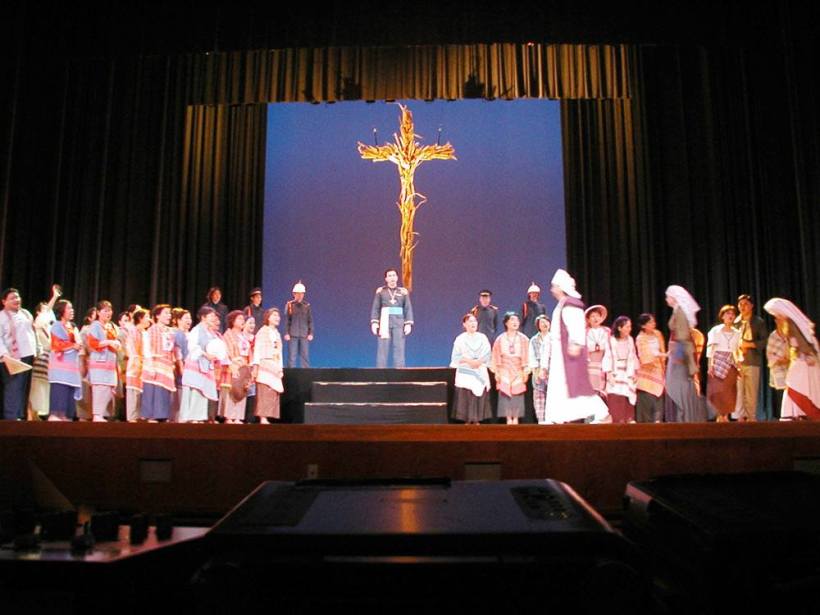
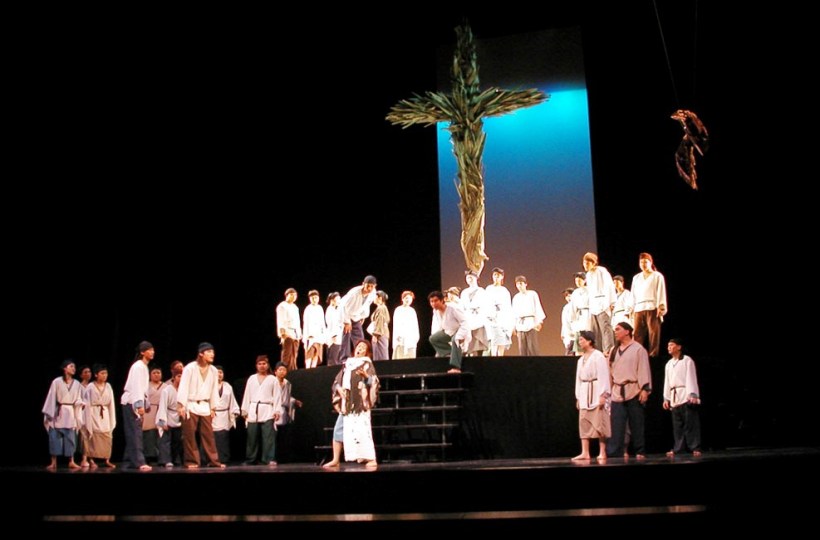
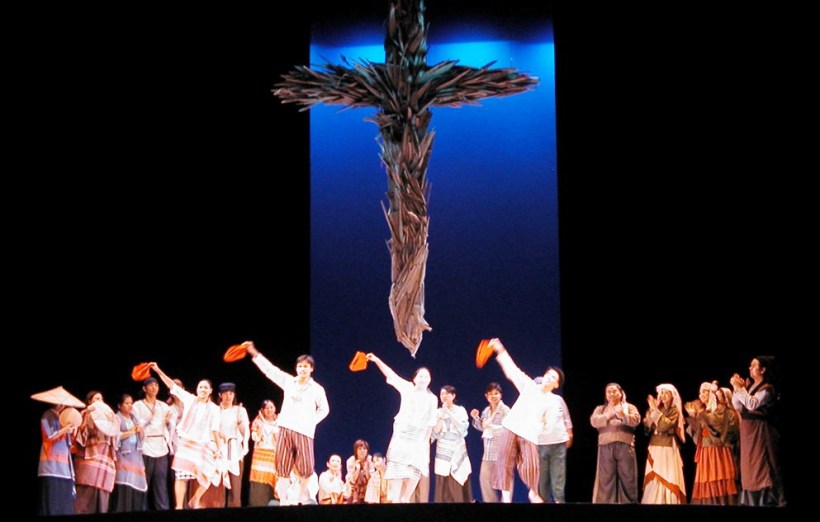
►In 2003, the Tokyo Opera Association and the University of Santo Tomas (UST) Conservatory of Music co-produced an opera about Lord Takayama – “The Blessed Lord – Ukon Takayama” — to mark the 450th anniversary of the daimyo’s birth, along with the centennial of Japanese migration to the Philippines when Japan mobilized road construction laborers to work on the scenic Kennon Road linking Baguio City in northern Luzon with the lowlands in the first major wave of Japanese immigration to the Philippines.
Based on “Takayama Ukon,” a novel written by Otohiko Kaga, the two-act opera opens with the tale of Takayama’s banishment to Manila in November 1614, along with his family and followers. The story tells of Lord Ukon Takayama, former samurai-general and daimyo who, turning into a committed follower of Christ, gives up power, fame and fortune for his faith.
Exiled for His Faith
As Takayama defies traditional authority, he is exiled to far-off Manila where he continues his apostolate and evangelical mission but dies 40 days – (“40” days in the Biblical sense, but actually 44 days) — after his arrival. Filipino-Japanese relations are further strengthened with Takayama on his death bed, admonishing his countrymen “to live in harmony with Filipinos.”
The Filipino-Japanese cast performed in both Japanese and Philippine citiesA Japanese was cast as the Spanish Governor-General of ManilaThe UST student-actors in the cast took a leave for the duration of the performances
The opera was the brainchild of Edward Tuazon Ishita (b. 1947), a Japanese-Filipino from Osaka who headed the Tokyo Opera Association. The Lord Takayama opera listed Dean Raul Sunico, Fr. Manuel P. Maramba, OSB, and Edward T. Ishita as executive producers. It showcased a variety of talents, featuring cast members from Japan and the Philippines. The libretto was primarily written in English, with some parts in Tagalog, Japanese and Spanish. The music was composed by Fr. Maramba.
The opera adapted to the available stage — but always, it was a minimalist Cross that servd as backdrop.The opera incorporated such Philippine cultural features as the “Tinikling Dance” to welcome Lord Takayama to Manila
The University of Santo Tomas contributed the services of the UST Symphony Orchestra, under the baton of Herminigildo Ranera, augmented by the Rondalla under James Peter Namit. The chorus consisted of the UST Liturgikon Vocal Ensemble under Eugene de los Santos.
Premiere in Tokyo
The opera had its premiere on July 25. 2003 in Tokyo, at the Tokyo Bunka Kaikan Hall, with former Prime Minister Tsutomu Hata leading the distinguished guests, and later in Takaoka, Kanazawa, Takatsuki and Osaka Cathedral. The Philippines presented the opera beginning August 25, 2003 in Davao and Cebu, with four performances in Manila. In all, the opera had 21 performances before audiences in both Japan and the Philippines. ◘


















 Blessed Justo Takayama Ukon