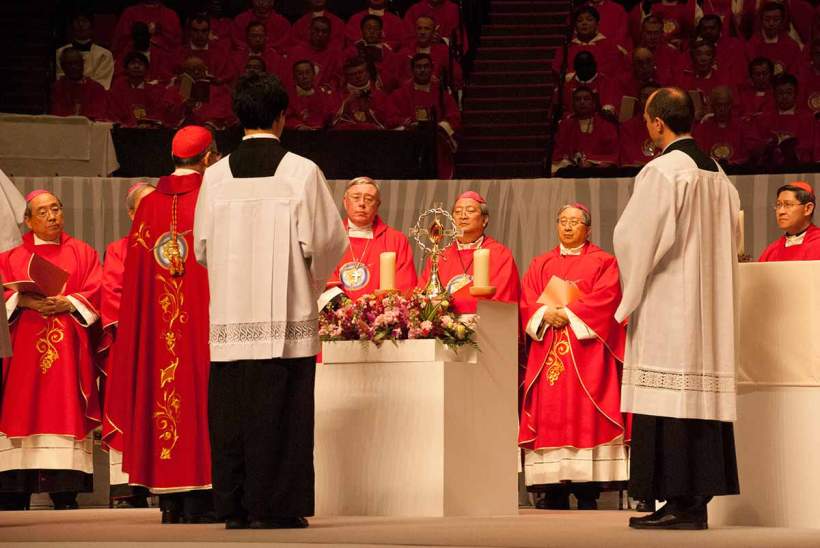
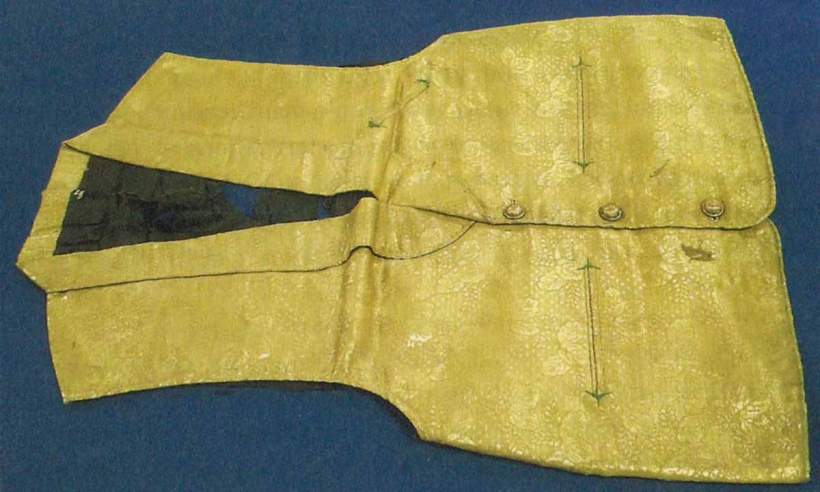
In front of the altar, a piece of fabric from Ukon’s vest was displayed as a sacred relic as Archbishop Takeo Okada of the Archdiocese of Tokyo made a formal plea for the beatification of Ukon.
Post-Beatification Notes
Hundreds of nuns from various religious women’s congregations from around the world were also present, but the CBCJ Secretariat did not have the actual count. They were also representatives from the Anglican, Lutheran and Methodist Churches.
Fr. Albert Fuyuki Hirabayashi, SJ, secretary of the CBCJ Committee for the Promotion of Saints, confirms there were some Buddhist monks too.
Two descendants of Takayama Ukon from “near Kanazawa” also attended.
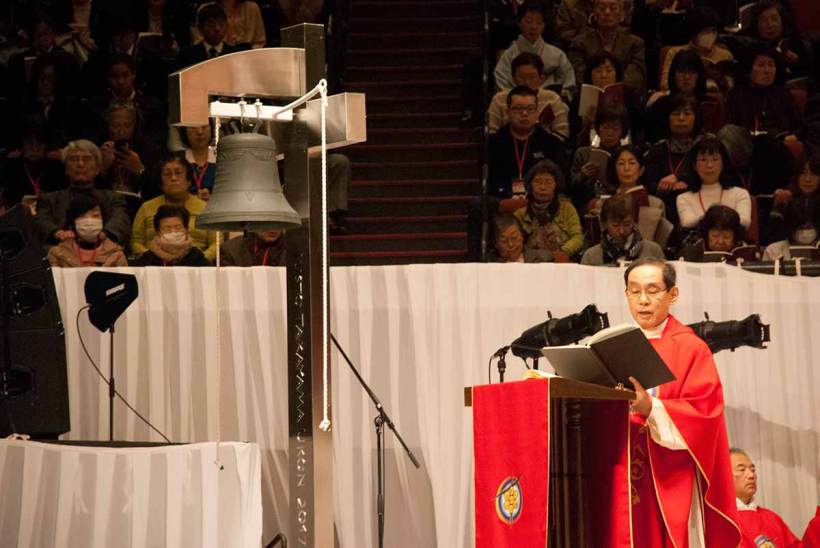
The special liturgy was comprised of prayers and songs in different languages including Latin, English, Tagalog, Korean, Vietnamese and Italian. They were chosen to express the richness of the faith in the Roman Catholic Church, especially in Japan – which has a pantheon of 42 canonized Saints.
In a nod to the estimated 460,465 Filipinos residing in Japan, of whom some 396,000 are Catholics, the Tagalog song “Salamat sa Iyo” (Tanging Alay) was chosen as the offertory hymn.
During the same week, the NHK (National Television of Japan) dedicated a lot of broadcast time in their evening news prime time. The Lord Takayama Jubilee Foundation offered “Live Streaming” of the three-hour Beatification Ceremonies, which was shared with many requesting networks around the world. (The “Live Streaming” continues to be available in the Takayama Website’s Blog Section.)
With Cardinal Angelo Amato officiating at the celebrations, the Thanksgiving Mass in the Osaka Cathedral of Mother of God was celebrated on Wednesday (Feb. 8). Another Thanksgiving Mass was held on Thursday (Feb. 9) in Kanazawa (Carmelite Parish) where Blessed Justo spent his last 26 years in Japan before his exile in Manila. On Friday evening (Feb 10), the last large Thanksgiving Mass was celebrated at the St. Ignatius Church in Yotsuya, Tokyo.
At the sidelines of the Beatification Ceremonies, the British archbishop, Msgr. Paul Richard Gallagher, the Holy See’s Secretary for Relations with States (the third highest position in the Vatican), met with the Prime Minister of Japan, Shinzo Abe to celebrate the milestone event. ◘
Fr. Albert Fuyuki Hirabayashi, SJ, Sercretary of the CBCJ Committee for the Promotion of Saints
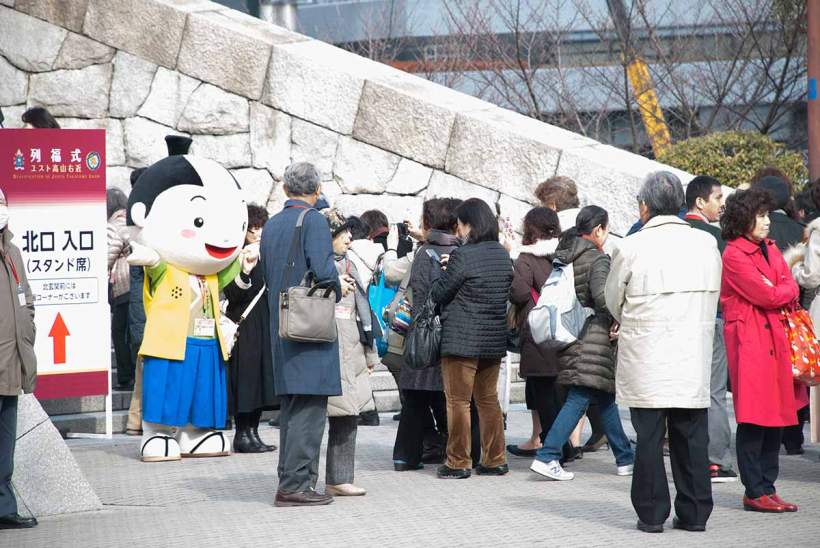
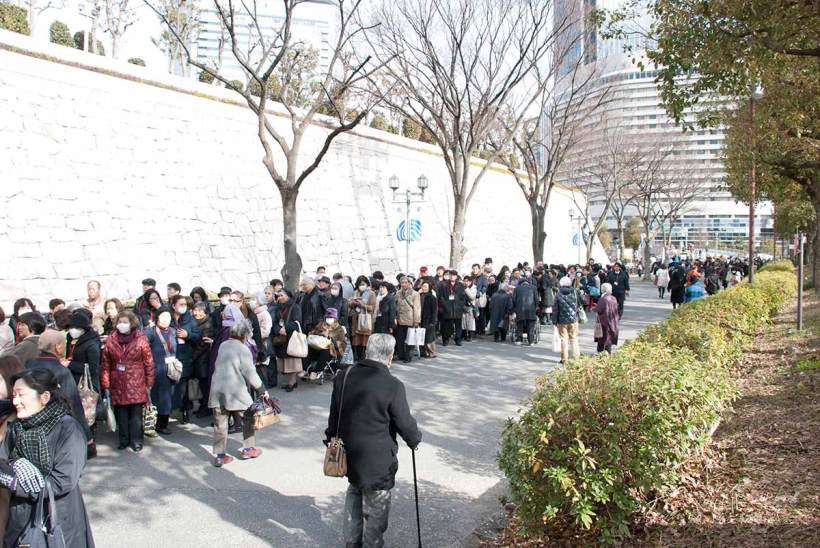
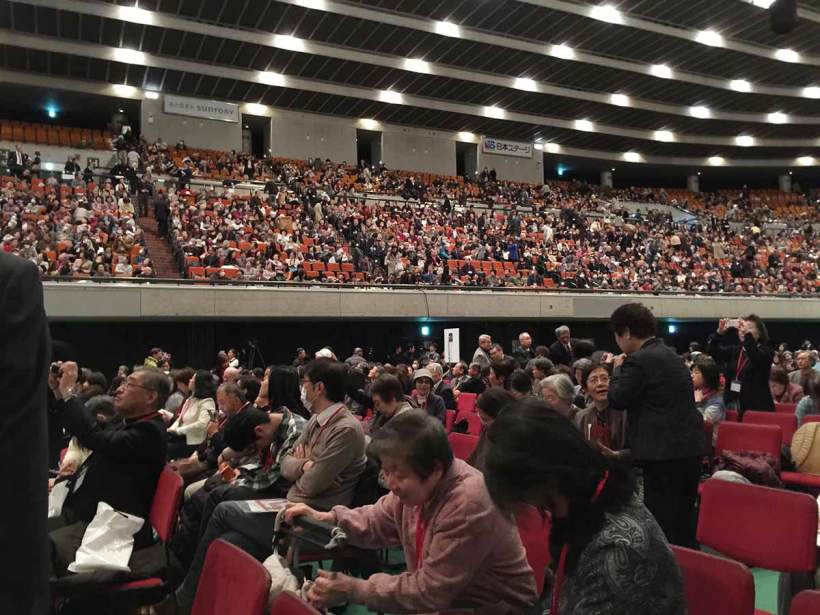
Catholic Online reported: “Over 12,000 people crowded a Catholic Church in Osaka, Japan.” The venue of the Beatification Ceremonies was not a church – but the Osaka-jo Hall, a multi-purpose concert hall with seating for 10,000 persons, with ticketed entry for audience control.
By Dr. Ernie A. De Pedro, Managing Trustee Lord Takayama Jubilee Foundation
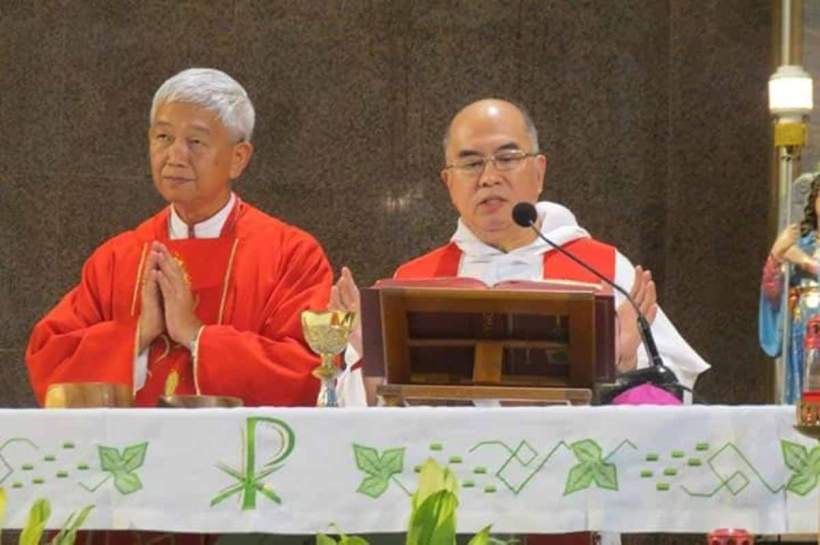
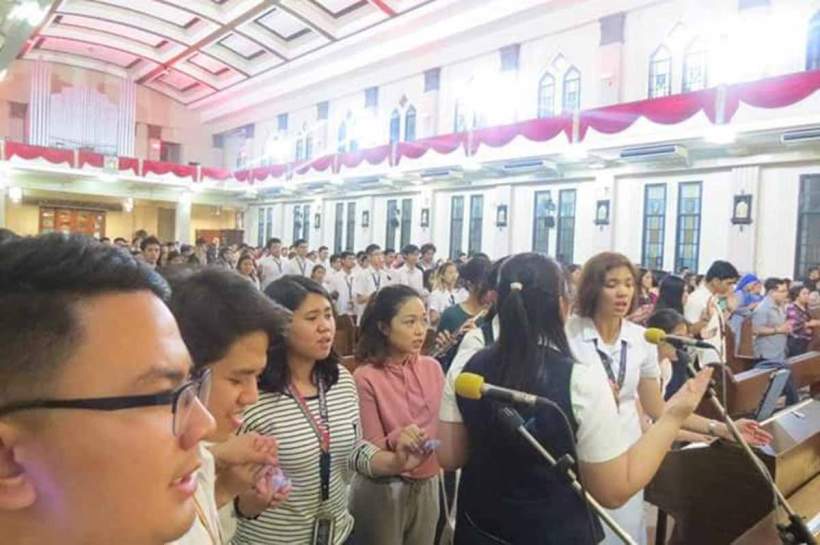
At the University of Santo Tomas (UST), center of the Philippine participation in the Takayama Beatification Process, Manila Auxiliary Bishop Broderick Pabillo celebrated the Thanksgiving Mass for the Beatification of Blessed Justo Takayama Ukon on the same afternoon as the Beatification Rites in Osaka. It was concelebrated by Fr. Jose Antonio Aureada, OP, Regent of the UST Graduate School, which is the home of the Lord Takayama Professorial Chair for Philippine-Japanese Studies since 1989.
On February 7, 2017, Tuesday, 12pm – 3pm, Dom Justo Ukon Takayama will be beatified. Watch a Live Stream of the event on YouTube. The stream starts at 10AM.
►Justus Ukon TAKAYAMA is the standard Western way of writing the name of a Japanese Christian: Christian name, FIRST; Japanese given name, SECOND; and surname, LAST. Examples: Paul Yoshigoro TAGUCHI. Or Paul Yoshinao OTSUKA. Or Gracia Tama HOSOKAWA.
But other Japanese Catholics prefer their Christian name in the middle. Thus: Toru Albert NISHIMOTO. Or Iwao Daniel IKEGAMI.
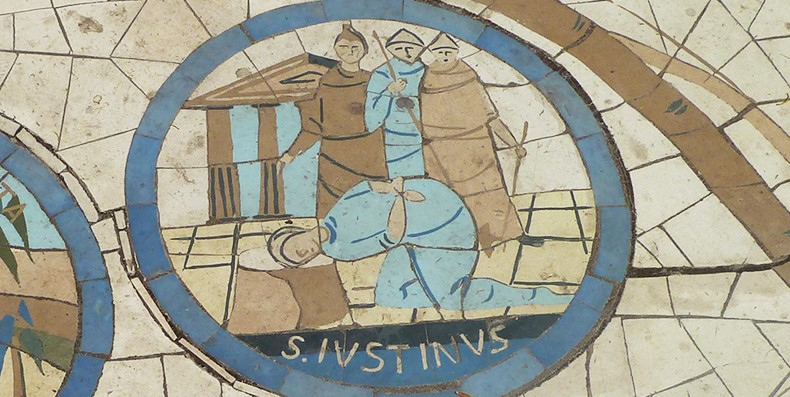
A third style is preferred by the Church of Japan for Ukon: Justus TAKAYAMA Ukon. Takayama’s Christian name is Justus (Variants: Justin, Justy, Justino, Justiniano) — after the early Christian saint, St. Justin Martyr (100-165 AD).
It is Justus / Iustus in Latin; Justo in Spanish and Portuguese, and Giusto in Italian. In full: Justus TAKAYAMA Ukon.
Standard Japanese Usage: Surname First
In Japanese standard usage, it is TAKAYAMA Ukon – (高山 右近) – surname, FIRST.
“Ukon” was derived from the Heian era’s “Ukonoefu” (Lieutenant of the Right Division of Inner Palace Guards), which was among many obscure (and empty) court titles that was a fad among the samurai of that period. It was an honorific title that became an endearing first name — much like Filipino nickname “Erap” (for Pare). The use of ‘Ukon’ is akin to the Filipino endearment for beloved bosses: “Amo-Boss-Chief!” (In today’s lingo, simply “Bossing.”)
Other Earlier Names
In various stages of his life, Takayama used other names, as is the standard Japanese practice.
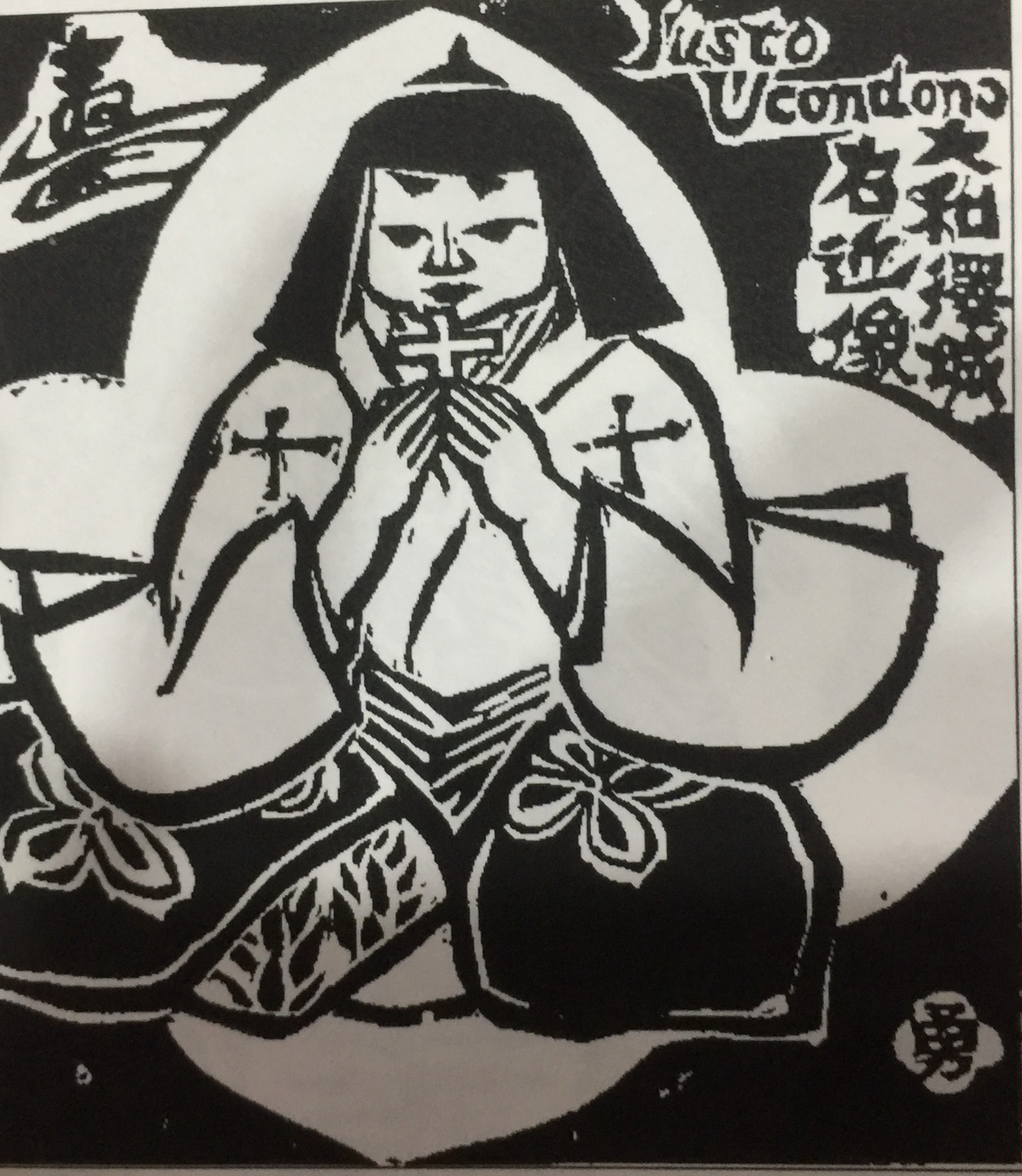
Wood-cut of the Takayama scion at 12, when he was baptized “Justo Takayama”
His childhood name was TAKAYAMA Hikogorō (彦五郎) – in missionary accounts, Hicogorodono. After his coming-of-age ceremony – (in Japan, age 20 marks a person’s transition from being a child to being an adult) – Takayama was given the adult name TAKAYAMA Shigetomo (重友).
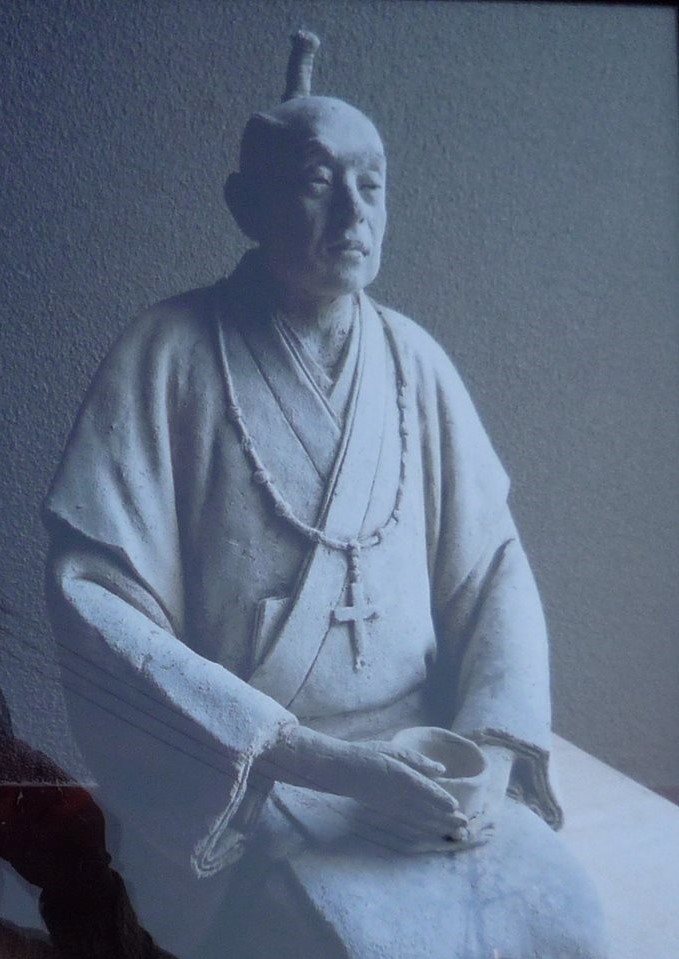
Justo Ukon Takayama — as castle-lord of Takatsuki
When Justus became Lord of Takatsuki (in Settsu province) in 1573 (at age 21), he obtained the name TAKAYAMA Nagafusa – (“Naga” was a nod to the ruling hegemon Oda Nobunaga.) Because he affected the name Ukon, this became ‘TAKAYAMA Ukon-no-Tayû Nagafusa.’ As he was a Christian, it was now ‘Justus TAKAYAMA Ukon-no-Tayû Nagafusa.’ In short: ‘Justus TAKAYAMA Ukon.’
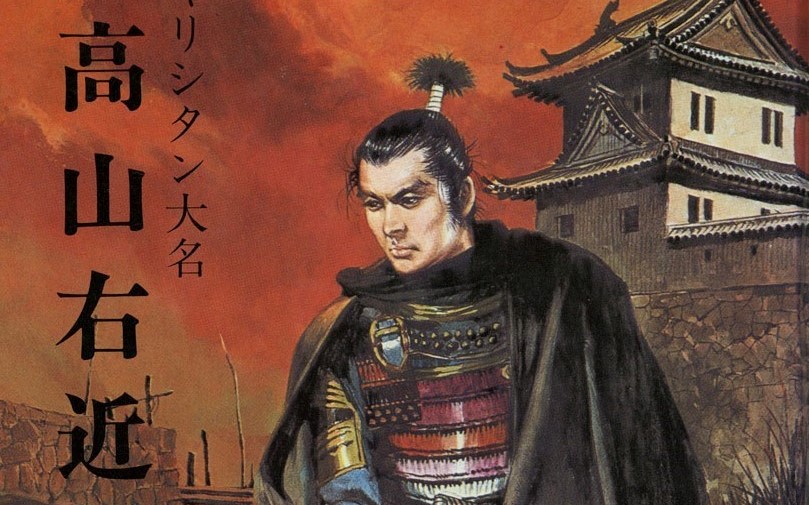
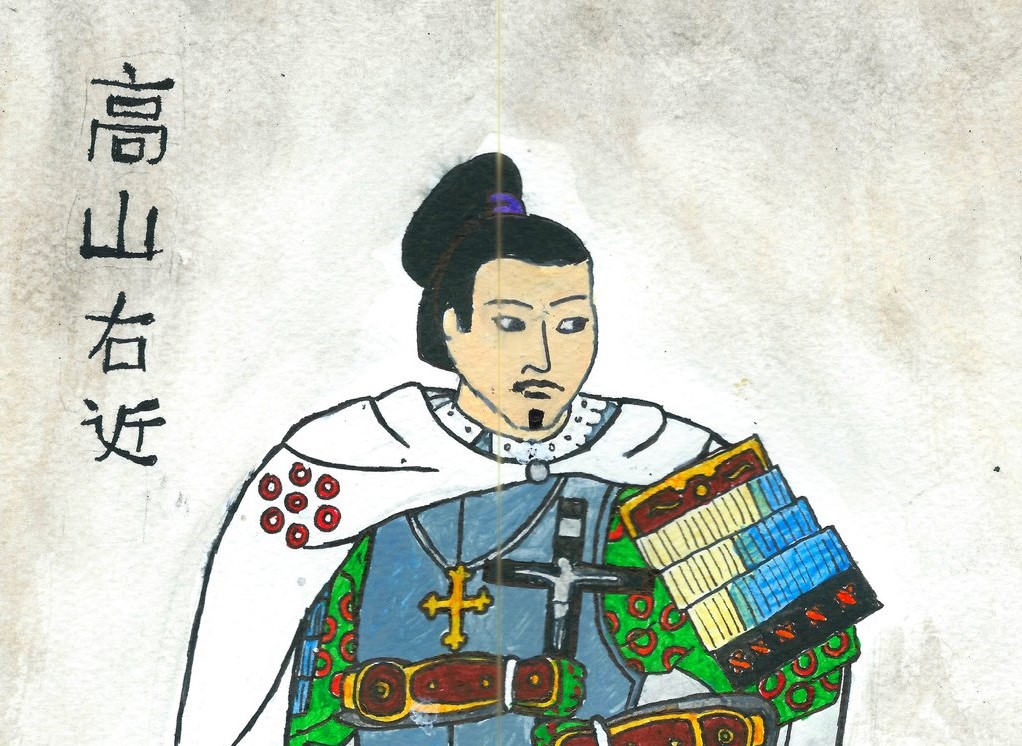
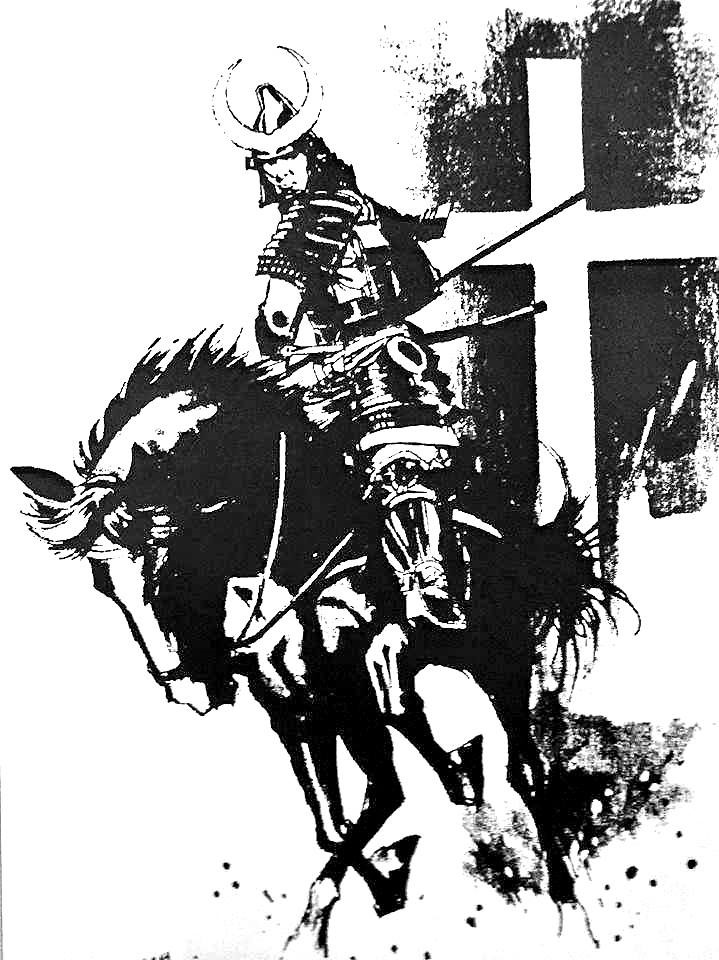
Daimyo Justo Ukon Takayama — at the head of his army whose tunics bore a large Cross
He signed ordinances as Daimyo of Takatsuki as ‘Takayama Ukon-no-suke Jusu’ — (at another time, Jushutsu). “Jusu” and “Jushutsu” are both Ukon’s own rendering of “Justus.”
When Lord Takayama refused to abjure his Christian religion, the Regent Hideyoshi (who was wary of any fealty to a foreign God) stripped him of his feudal domain in Akashi.
Another official name Lord Takayama used: ‘Takayama Ukon-no-tayû Yûshô Nyûdô Nambô.’ Signature in another document: ‘Takayama Ukon Nyudô Nambô.’ Short reference: ‘Takayama Nambô.’
Recognized as one of the ‘Top Seven’ teamasters in Japanese history, Takayama chose another name for that artistic aspect of his life –‘ Minami-no-Bô TAKAYAMAHida no-kami.’
As a tea-master, Takayama gained renown as ‘Minami-no-Bô TAKAYAMAHida no-kami.’
He was a prized pupil of Sen no Rikyū (d. 1591), who is considered the historical figure with the most profound influence on the development of Chanoyu. Ukon, one of the celebrated Rikyushichitetsu (Rikyu’s Seven), was credited with refining the tea ceremony into a serene celebration, with ritual movements “almost like a Mass.” The spirit of the art of tea – characterized by the qualities of harmony, reverence, purity, and tranquility — found in Ukon its Christian transfiguration.
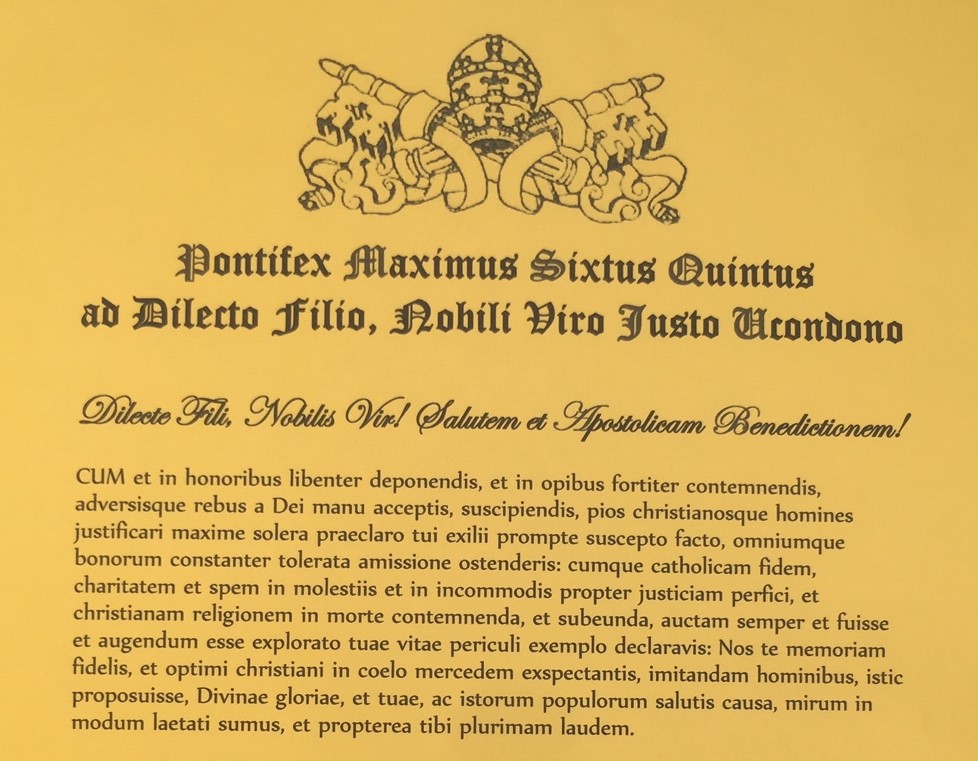
Papal Breve to Justo Ucondono
Pope Sixtus V (r. 1585-1590) on April 24, 1590, the Supreme Pontiff addresses him as “Justo Ucondono.”
In the “Papal Breve” signed by Pope Sixtus V (r. 1585-1590) on April 24, 1590, the Supreme Pontiff addresses him as “Justo Ucondono.”
In all Jesuit accounts, Takayama was simply known as “Justo Ucon-dono” – which was his name in Manila. (“Lord Takayama” was never used in Manila.)
Thus, Takayama is “Justo Ucondono” in Blair & Robertson (Vol. 28, p. 35). This is the 55-vol. work of Emma Helen Blair, James Alexander Robertson, Edward Gaylord Bourne, “The Philippine Islands, 1493-1898: explorations by early navigators, descriptions of the islands and their peoples, their history and records of the Catholic missions…” (A.H. Clark Company, 1903).
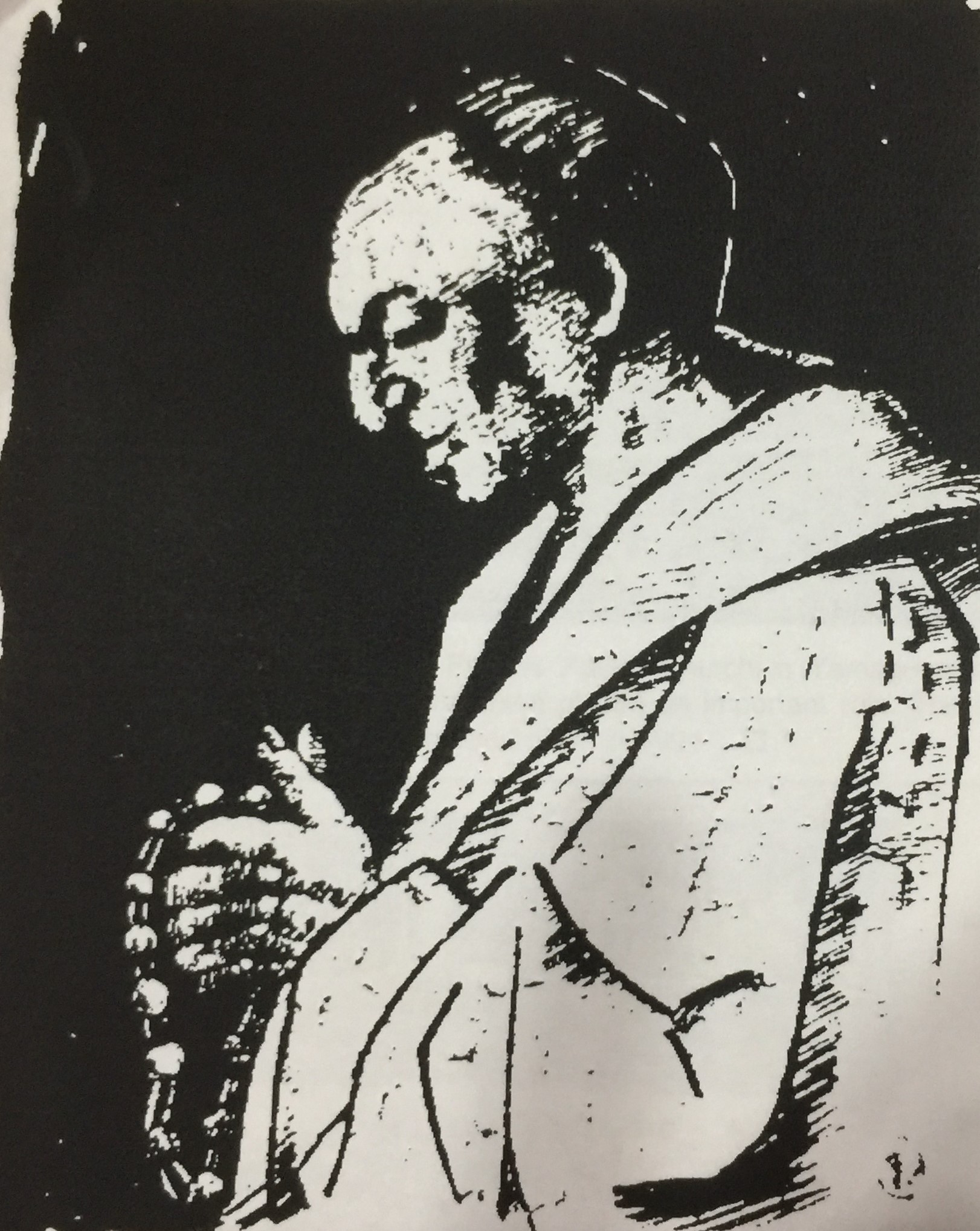
This is the image used in ‘estampitas’ — or prayer cards’ — distributed at the San Vicente de Paul Church at San Marcelino St., Ermita for a Takayama Memorial Mass on Sept. 20, 1942 by Japan’s ‘The Catholic Unit’ in World War II.#
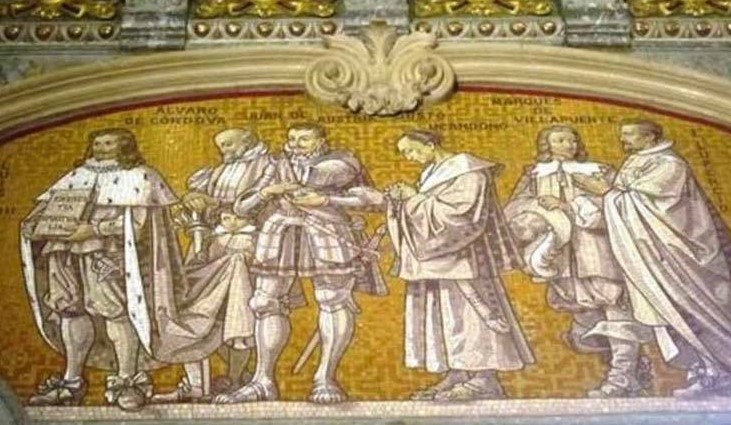
Mosaic at the vestibule of the Jesuit Church at Manresa, Spain — showing Ukon as one of six Catholic noblemen who underwent the Ignatian “Spiritual Exercises”
‘Dom Justo Ukondono’ was sometimes spelled Ucan-dono – as engraved in the Jesuit-commissioned Manresa Mosaic at the Church of Ignatius of Loyola at the Santa Cueva in Manresa, Spain. (The image used in the 1942 ‘estampita’ was derived from this Manresa mosaic.)
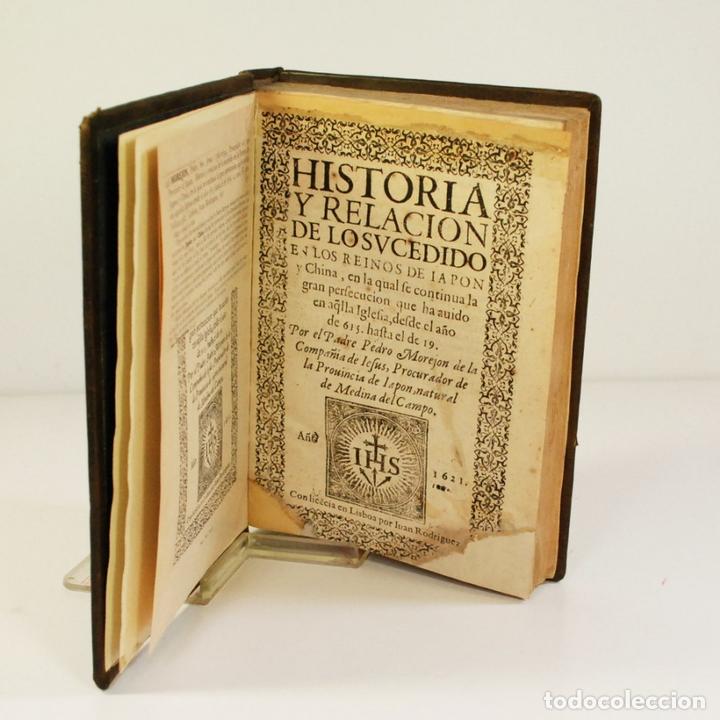
In the first printed biography of Takayama — Morejon, Pedro, 1562-1634?, “Breve relacion de la persecucion que huvo estos años contra iglesia de Japon” (Written in Spanish, and printed first at Mexico in the West Indies, the yeare of Christ M.DC.XVI – just one year after the death of Don Justo in Manila) — Padre Morejon, SJ, father-confessor of Don Justo who accompanied him to Manila, identified Lord Takayama as “Justo Tacayama [sic] Minaminobo.”
In a book on Japanese martyrs published in Rome in 1646 – “Fasciculus e Japonicis Floribus…” – (the earliest book that contains a depiction of Takayama), he was identified as “Dominus Iustus Vcondono Iappon” (Lord Justus Ukondono [of] Japan).
In adopting ‘Blessed Justus Takayama Ukon,’ it is bothersome to footnote to Filipino devotees that Ukon is not his last name: It is Takayama.
As there are no other celebrated Takayama figures in history, ‘Lord Takayama’ immediately evokes him. Thus ‘Blessed Takayama’ should be sufficient to identify him.
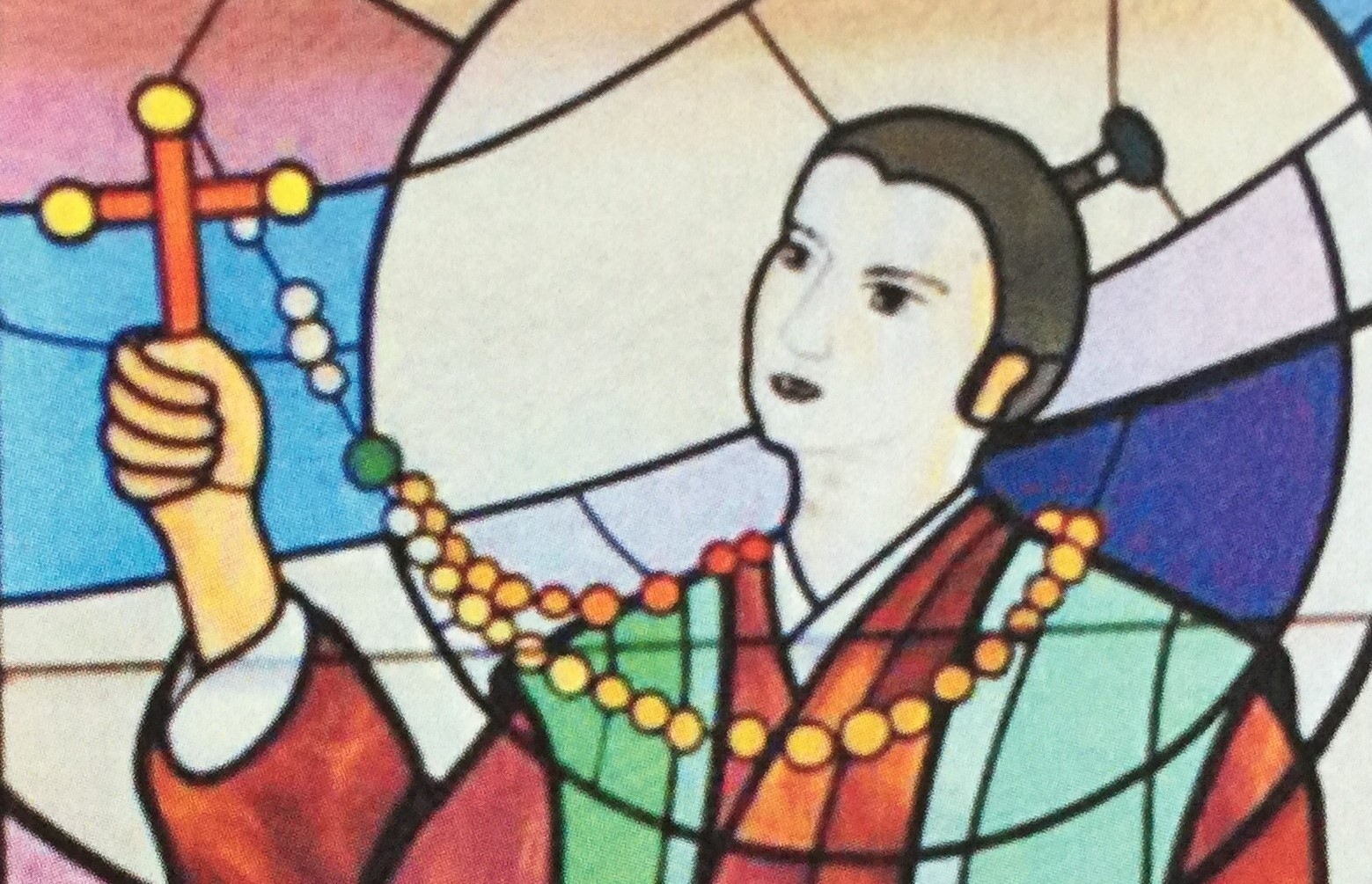
Stained-glass window at Shodoshima Island.
In light of Pope Francis ‘Decree of Martyrdom’ (Jan. 21, 2016) proclaiming Takayama as a “Japanese layman martyred in Manila” (making Manila a necessary identifier — to denote that, alone among Japan’s 436 venerated martyrs, he was ‘martyred’ outside Japan) — it makes sense to follow the Papal narrative by referring to him as “Blessed Takayama of Manila.”◘
As Ukon Takayama was christened in June 1563 with the baptismal name “Justo” after St. Justin Martyr (c. 100 – 165), it may be presumed that Ukon was baptized on June 1, 1563 — feast day of St. Justin.
With Manila Archbishop, Cardinal Luis Antonio Tagle, concelebrating the Mass at the Takayama Beatification Rites in Osaka, Japan on Tuesday, February 7, 2017, Manila Auxiliary Bishop Broderick S. Pabillo, D.D., will celebrate the Takayama Thanksgiving Mass in Manila at the UST Chapel at 5:15 PM.
By Dr. Ernie A. De Pedro, Managing Trustee Lord Takayama Jubilee Foundation
There are Internet posts claiming Lord Takayama and his family lived in Dilao [see Plaza Dilao in History]. This is not correct. Takayama never set foot on Dilao. He and his family always stayed at the Jesuit-owned guesthouse, Casa San Miguel, in Intramuros where he was visited “almost daily” by the Spanish Governor-General in a vain effort to solicit his advice on how Spain could conquer Japan. (Takayama declined to encourage any such plots.)
He was always treated royally; met some newly-arrived Japanese visitors at the garden of the San Agustin Church (the garden is still there!); visited Fort Santiago with his grandchildren, and watched them play at a corner rampart of the Muralla.
Only Spaniards lived in Intramuros. Filipino and Chinese help – servants, gardeners and the like — worked in Intramuros during the day, but had to return to their lodgings OUTSIDE Intramuros after Angelus.
By Dr. Ernie A. De Pedro, Managing Trustee Lord Takayama Jubilee Foundation
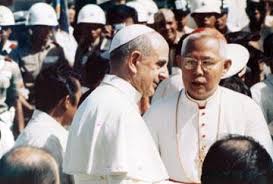
Manila Archbishop Rufino J. Cardinal Santos greeting Pope Paul VI after the Pope trooped the line during arrival honors at the Manila International Airport on Nov. 27, 1970.
►In 1963, there was NO MOVEMENT in Manila for the Beatification of Dom Justo Ukon Takayama (1552-1615) at all.
In 442 years since the introduction of Christianity in 1521, the Philippines has not had a single saint canonized. San Lorenzo Ruiz (1594-1637), the Philippine Protomartyr, was canonized — i.e., enrolled in the Canon of Saints — only in 1987. Dom Justo Ukon Takayama – a.k.a. Dom Justo Ukondono — remained in Vatican books as the only Philippine Catholic proposed for sainthood by the Philippine Church in 1630.
But before his deportation to Manila – for steadfastly refusing to abjure his Catholic Faith, Lord Takayama was a celebrated Christian samurai widely recognized as a pillar of the Church during Japan’s Christian Century (1549-1650).
As Bishops all over the world gathered in Rome for the Second Vatican Council (1962-1965), Japanese Bishops took the opportunity to seek out Manila Archbishop, Cardinal Rufino J. Santos, to prod him to revive the dormant ‘Cause’ of the Confessor of Christ, Dom Justo Ukon Takayama.