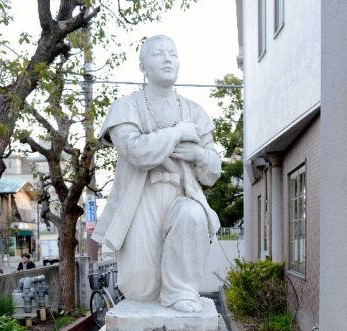
The ‘Samurai of Christ,’ Justo Takayama Ukon, by Italian artist Nicolao Arrighini
►The gift is a 125cm-tall (‘altar-size’) bronze copy of the marble statue (see photo e-mailed by Fr. Fuyuki Albert Hirabayashi, SJ, Secretary of the CBCJ Committee for Promoting Canonization) made by the Italian artist Nicolao Arrighini (1905-1977), which stands in front of the Catholic Church of Takatsuki, Lord Takayama’s feudal domain for over 13 years. On the pedestal the words of St. Paul were inscribed: “For to me, living is Christ and dying is gain” (Philippians 1:21). The statue was presented by Father Peter Schweiger, Superior General of the Claretian Missionaries (1949-1967) on Feb. 3, 1965, on the 350th death anniversary of Lord Takayama Ukon (1552-1615). The Claretians, who arrived in Japan on Oct. 29, 1951, had been given charge of the parishes of Takatsuki, Kori, Hirakata and Kadoma.
Since 1977, Filipinos have had ONLY ONE image of Lord Justo Takayama Ukon (1552-1615) — that is ♦ the Takayama statue by Johannes Masaaki Nishimori at Plaza Dilao – as a Japanese warrior, daimyo, and dedicated protector of Christian missionaries. As explained by Fr. Hubert Cieslik, SJ, lead historian of the Takayama historical studies, Lord Takayama’s hand, “horizontal over the sword, is a symbol of peace and justice,” at the same time, “the sword, forming a part of the long-beam of the Cross, is a symbol of a Christian samurai.” ♦ A second Takayama statue, sculpted by Arts & Letters students of the University of Santo Tomas (UST) was copied from the Takayama statue at Plaza Dilao. This statue now stands at the entrance of the Thomas Aquinas Research Complex (TARC).
Four Takayama Statues by Nishimori – One in Manila; Three in Japan
In all, there are four iterations of this bronze statue – cast from the same mold made by Nishimori: The iconic Takayama statue that stands at ►Plaza Dilao, Paco, Manila (1977); ►Takatsuki City (Osaka Prefecture) at the Shiroato Historical Park; ►Takaoka (Toyama Prefecture) at Kojyo Park, and ►Takamatsu (Kagawa Perfecture) at the entrance of the Shodoshima Sonosho Catholic Church of St. Teresa of the Child Jesus.
When at last, Takayama was beatified on Feb. 8, 2017, this was – for Filipino Catholics — the image of this heroic samurai-martyr – the “Samurai of Christ.”
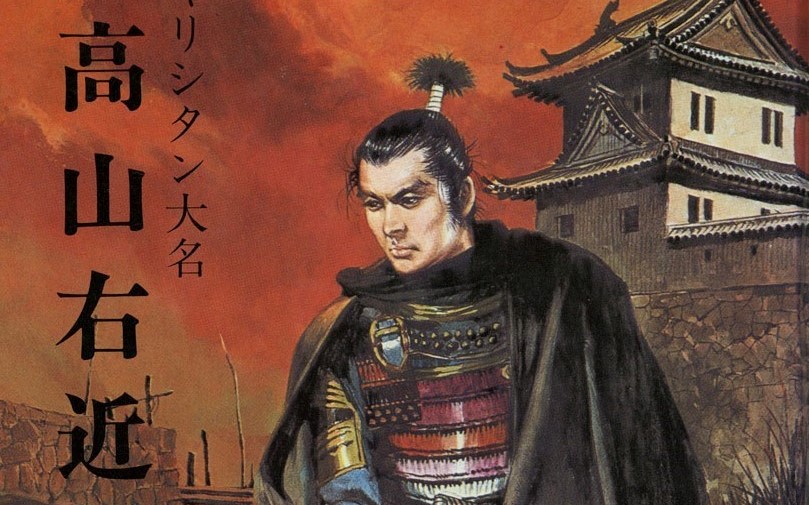
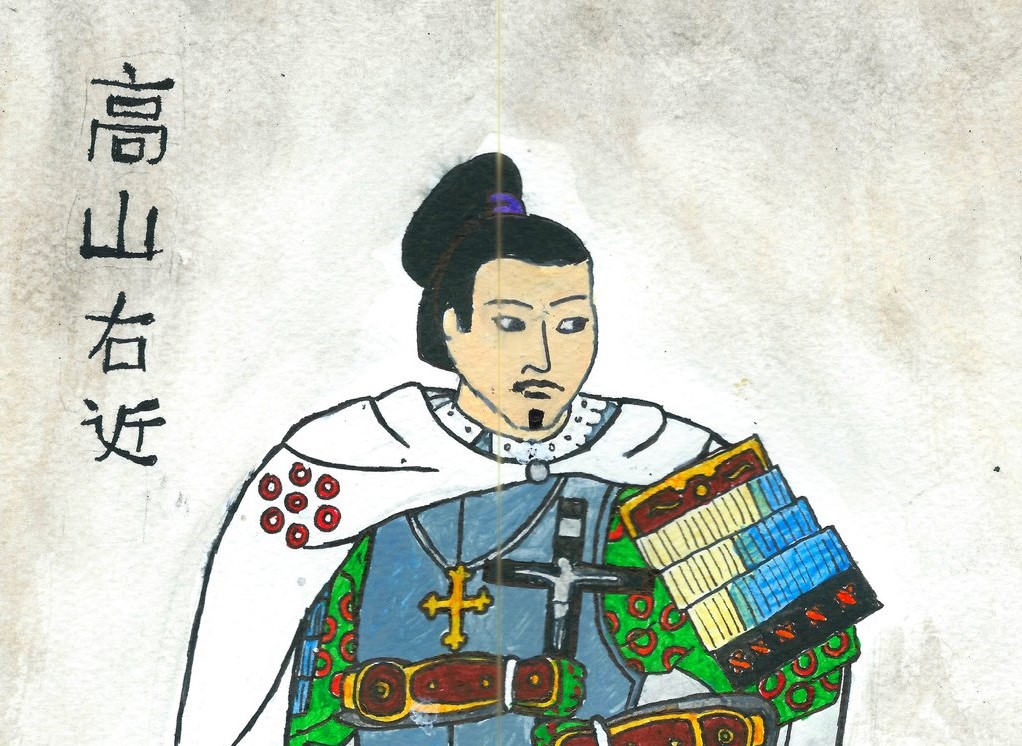
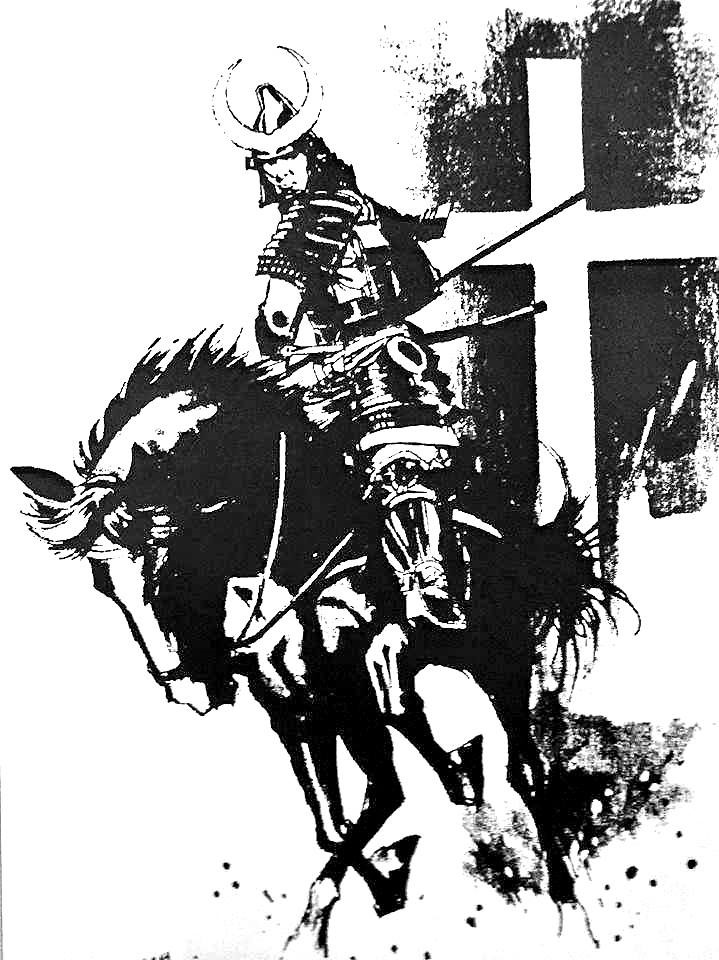
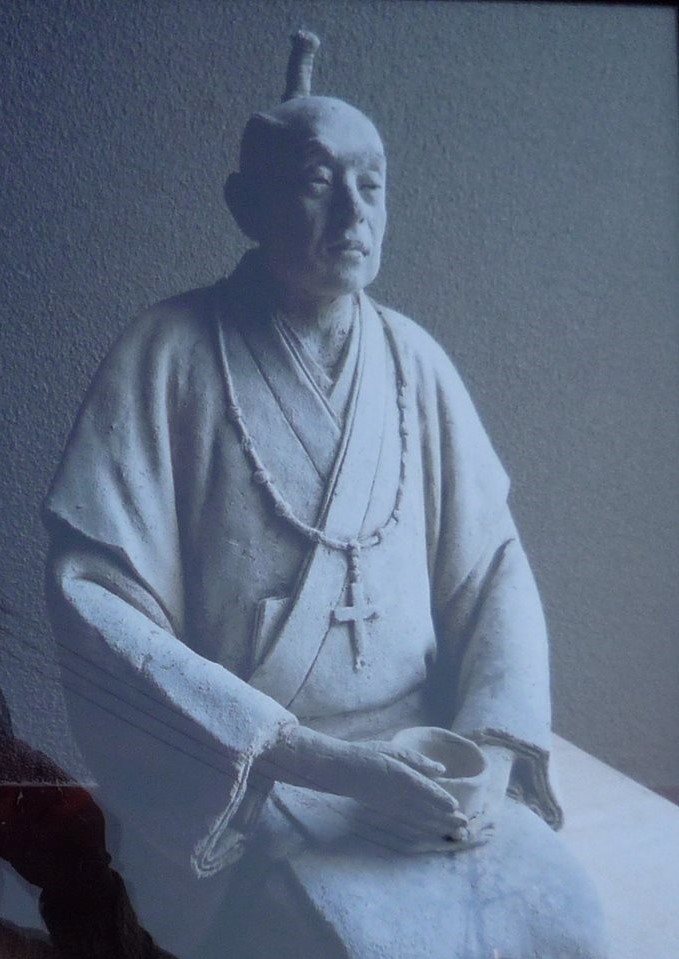
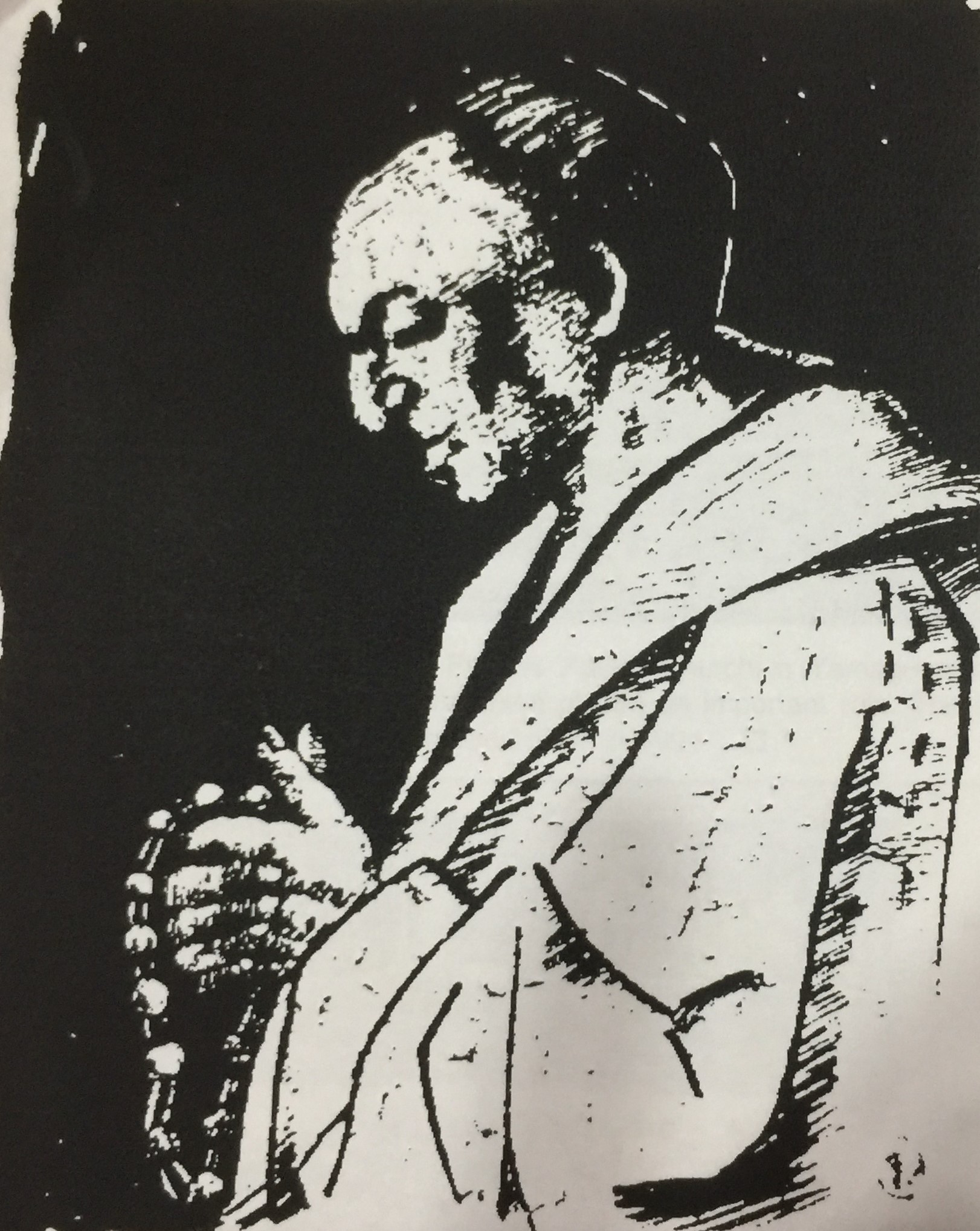
There are over a hundred images of Takayama Ukon. You can Google.com/Images or Bing.com/Images or Pinterest for dozens of images, and select one to your liking – as samurai general, as ronin, as prayerful knight, as charging horseman, as Japanese poet, as teamaster, as martyr.
But the most indelible was that by Nishimori that is the centerpiece of the Philippine-Japanese Friendship Park (1977) at Plaza Dilao – which we have grown up with in the past four decades.
The Blessed Justo Takayama Ukon Canonization Movement has commissioned the celebrated Paete woodcarver Paloy Cagayat, whose woodcarving of St. Pedro Calungsod (1654-1672) is enshrined at the Vatican, to replicate in wood the Takayama statue at Plaza Dilao.
This image of Blessed Takayama as a warrior-martyr will be more readily recognizable – by Filipino devotees who wish to pray for his intercession. ◘
Dr. Ernie A. de Pedro
Managing Trustee
Lord Takayama Jubilee Foundation
Cardinal Shirayanagi Expresses Church Apology on Takayama Anniversary in Manila
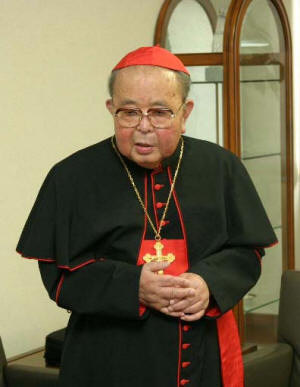
►MANILA — (UCAN, Feb. 9, 1995) — During the 1995 Memorial Mass for the Servant of God, Justus Takayama Ukon (1552-1615) at the Chapel of the University of Santo Tomas (U.S.T.) in Manila, Cardinal Peter Seiichi Shirayanagi of Tokyo — the prelate in charge of the Takayama Beatification Process — apologized for the suffering inflicted by Japan during World War II, which he described as the “darkest period” in his country´s modern history.
In his homily Feb. 1, Cardinal Shirayanagi said that Japanese Catholics, “as parties involved in the war, share in the responsibility for more than 20 million (war) victims in Asia and the Pacific.”
Japanese Bishops Ask Forgiveness ‘From God and Our Brothers’
“We, the Catholic bishops of Japan, as Japanese and members of the Catholic Church, sincerely ask forgiveness from God and from our brothers and sisters of Asia and the Pacific for the tragedy brought by Japan during World War II,” said the Cardinal, who was then president of the Catholic Bishops´ Conference of Japan.
The Memorial Mass at the University of Santo Tomas, sponsored by the Movement for the Beatification of Ukon Takayama headed by Prof. Ernesto A. Pedro, commemorated both the 380th death anniversary of Lord Justo Takayama Ukon, a Japanese Catholic nobleman who died in exile in Manila on Feb. 3, 1615, as well as the 1945 Battle of Manila (Feb. 3 – March 3, 1945).
Some 100,000 civilians were killed in the month-long battle that began Feb. 3, 1945, in which U.S. forces retook the city from occupying Japanese troops.
This February 3, Manila city officials marked the 50th anniversary of the beginning of the battle with simple ceremonies at Luneta Park including wreath-laying, photo exhibits and a Mass at which Cardinal Jaime Sin of Manila presided.
At centuries-old Santo Tomas, where the Japanese interned thousands of U.S. and other Allied civilians during the war, Cardinal Shirayanagi expressed “determination to keep Japan from committing the same crime again.”
“As the Church of Japan, we renew our commitment to work toward the realization of human liberation and genuine peace in Asia and the Pacific,” he said, adding that Japanese Catholics constantly pray for victims of the war.
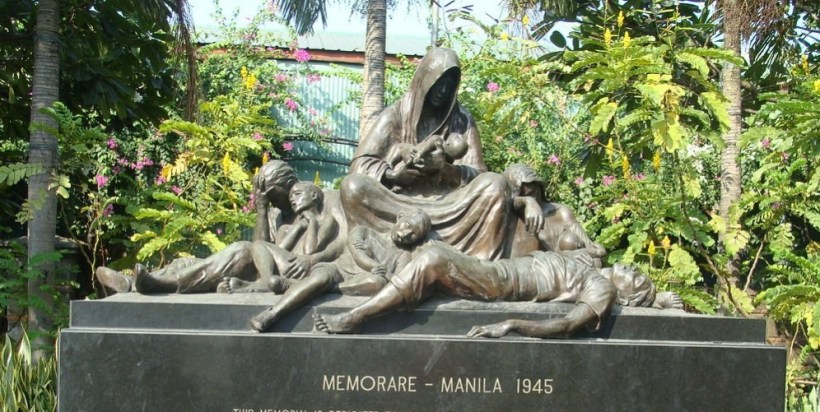
“Memorare Manila 1945” commemorates the death of some 100,000 Filipinos during the Battle for the Liberation of Manila Feb. 3-March 3, 1945. February 3 is the anniversary of Lord Takayama’s death in Intramuros, Manila.
Apostolate Among Overseas Filipino Workers in Japan Needed
One way the Japanese Church seeks to mend the damage inflicted against Filipinos by the war, the cardinal said, is through its apostolate with some 500,000 Filipino contract workers in Japan.
Even though Christianity reached Japan in 1549, but Catholics represent a small minority in his country, “only half a million among 120 million Japanese,” Cardinal Shirayanagi noted. It arrived in the Philippines in 1521.
The faith of Japanese Catholics, however, “has been tempered by centuries of relentless persecution … the most notorious in the world,” he added.
Also in his homily, the cardinal expressed gratitude for the “spontaneous response of the Filipino people” after the devastating earthquake in Kobe. This has comforted the victims of the January tragedy, he said, particularly as “this solidarity is offered by people who do not enjoy superfluities.”
Call for “Serious Effort for New Evangelization of Asia”
Cardinal Shirayanagi, who was also in Manila during the visit of Pope John Paul II on Jan. 12-16, reminded Filipino Catholics that the joint task at hand is “a new and serious effort for the evangelization of Asia.”
He cited addiction to worldly goods as the greatest challenge to evangelization today, having produced a “new idolatry.”
The cardinal observed that in Japan, people’s highest aspirations are to have more money, a higher standard of living and more material goods. ◘
►“A leading and actively Christian daimyo,” Lord Takayama’s life intersected the careers of the Three Hegemons who unified Japan – from the beginning of Oda Nobunaga’s rule (1573), through Toyotomi Hideyoshi’s consolidation of the interrupted unification, to the Shogun Tokogawa Ieyasu’s death (1616) – as the three rulers effectively ended a century of turbulent civil warfare in Japan. Though he was a minor daimyo, Ukon’s fief in the castle-town of Takatsuki (which he ruled for 12 years) straddled the strategically important highway between Osaka and Kyoto. One center of power could not attack the other rival power without reckoning with Takatsuki forces first.
As Daimyo of Takatsuki, and later, of Akashi, Ukon became instrumental in the widespread Christian evangelization of Japan. He became the patron of the pioneering group of Jesuit missionaries — (by 1600, numbering 95) — who had learned to work “a sombra de Justo Minami-no-Bô” – exemplified by three formidable Jesuits with contrasting personalities and strengths:
◘ Fr. Alessandro Valignano (1539-1606, Jesuit Inspector General of Missions in the Far East), who effected a strategy of avoiding religious conflict by adapting Christian teachings to Japanese customs and cultural traditions. The Jesuits built their churches in the Japanese style with interior rooms that followed local models, such as the use of “tatami” to cover the floor or of “shoji” to divide the inner space. These compliant churches conveyed the Jesuit approach to “accommodation,” according to which special attention was paid to the European priests’ and Brothers’ integration into Japanese society.
◘ Fr. Organtino Gnecchi-Soldo (1530-1609) who, after earning the respect of Oda Nobunaga, built a Jesuit church in Kyoto in 1576, a monastery and another church in Azuchi by Lake Biwa in 1580. He also opened a seminary for the training of native Japanese clergy. In sum, he made a foundational contribution to missionary work in Japan.
◘ Fr. Gaspar Coelho (1530-1590), Superior and Vice-Provincial of the Jesuit mission in Japan who became infamous among Jesuits and Japanese Christians alike for catalyzing the disfavor of Toyotomi Hideyoshi against the Jesuit mission in Japan. As he unwisely dipped his fingers into local internecine politics, Coelho tried to incite armed resistance by the Japanese Christian lords and wrote to Goa, Macao, and Manila for armed assistance. All of those he approached had much more sense than to comply, and his ecclesiastical superiors were furious at his ineptitude. ◘
Dr. Ernie A. de Pedro
Managing Trustee
Lord Takayama Jubilee Foundation
Brazil-born Fr. Iwao Daniel IKEGAMI, FMVD, celebrating Mass
Propagating the Faith ‘in Exile’
►Fr. Iwao “Wow” Daniel IKEGAMI, FMVD – Fraternidad Misionera Verbum Dei (in Spanish) or Verbum Dei Missionary Fraternity (in English) — highlights the special significance of Blessed Takayama Ukon to “exiles” like him — in a homily he delivered at a Beatification Thanksgiving Mass at the Ateneo de Manila in Quezon City, concelebrated by Rev. Fr. Tony Moreno, SJ, Father Provincial of the Society of Jesus in the Philippines.
Father “Wow,” who was ordained priest on Aug. 15, 2015 at the Maria Della Strada Parish Church, Katipunan Ave., Quezon City, attended the Beatification Ceremonies of Blessed Takayama Ukon in Osaka with other FMVD missionaries on Feb. 7, 2017, shares:
►“Minasan konbanwa.” Good evening everyone. Magandang gabi po sa inyong lahat.
I would like to introduce myself for those who do not know me. My name is Fr. Iwao Daniel Ikegami, remember: “Wow”! I-wow! I am a Japanese missionary with the Fraternidad Misionera Verbum Dei (FMVD). We are more commonly known here as the Verbum Dei missionaries. (Verbum Dei means “Word of God.”) Our founder is still alive; his name is Fr. Jaime Bonet, and he will be turning 91 years old this year. My superior, Fr. James McTavish, is here and some of our Verbum Dei sisters and also many other friends are here.
For sure many of you here are familiar with the life of Blessed Takayama Ukon; at the same time some of you may not know too much about him just like me until a few years ago.
Discovering Takayama Ukon Some Years Earlier
I knew the name Takayama Ukon, way back when I was still in Japan before I entered Verbum Dei but I didn’t know much about him. It was only three years ago when the Bishop of Kyoto, Bishop Paul Yoshinao Ōtsuka, was here in the Philippines and gave a talk on the life of Takayama Ukon that I came to know more about the life of this Christian feudal lord and samurai.
The most striking discovery in that talk for me was that Ukon died in the Philippines! Oh really? I didn’t know! Wow, I – WOW! That is amazing! He (Bishop Paul Ōtsuka) also mentioned that there is a statue of Takayama Ukon in Plaza Dilao, Paco, Manila!
I was so excited; imagine, the very next day I went to Plaza Dilao, I just couldn’t wait. I wanted to see it. I checked it on the map: What are some of the landmarks? Across the road from the statue was the Philippine Columbian Association (PCA), the oldest sporting club in the Philippines. I went by LRT. I found the place; from afar I could see the statue: Is that Takayama Ukon? I saw him dressed as samurai and it looked like he was holding a sword but it was a crucifix the same size as a samurai sword. I remembered St. Paul Miki, he was a samurai too. I stood in front of the statue and made a solemn prayer – “Lord, I want to be a samurai for your kingdom, even I want to give my life for you in the Philippines…”
I was so happy about this because we have one Filipino saint, San Lorenzo Ruiz, who was martyred in Nagasaki, Japan and now we have one Japanese Samurai who died in the Philippines who is on his way to canonization! Blessed Takayama Ukon is an inspiration for the Japanese Church and also for us all here in the Philippine Church.
My Journey to the Priesthood
I would like to share with you a little bit about my life and vocation also. Maybe you are wondering how did this Japanese end up here in Philippines, di ba?
My parents are both Catholics (which it is a rare case in Japan) so I was baptized when I was born. In Japan the normal situation is to be baptized when you are an adult. I have one older sister and one younger brother. My parents, right after getting married, migrated to Brazil, and I and my two siblings were born in the north of Brazil, near the Amazon River. Can you imagine to born in the Amazon – wow! When I was 10 years old, my whole family moved back to Japan, but to a small island far away from Tokyo.
As we were living in a remote area, it was only when I was 20 years old when as a family we began to go to Sunday Masses regularly. As I was beginning to discover the beauty and the richness of our faith, I met the Verbum Dei Sisters in Yokohama. And the first thing they invited me to do was to go to the Philippines. Just like Takayama Ukon who came to the Philippines almost 400 years ago, I came to the Philippines where I had a strong experience with The Word of God, an encounter with Jesus. I was 21 years old.
The Word of God that struck me then was “There is no greater love than to lay down your life for your friends and you are my friends.” (John 15:15) I had found what I was looking for: the kind of love, unconditional, the greatest love, the love of God. And I realized this is what happened to Takayama Ukon. Takayama was willing to undergo all the hardships — imagine he lost his property, his home because he discovered this love. A love that is stronger than death, exile, hardships, sufferings, humiliations. As St Paul said in our first reading (Romans 8:35-39): “What will separate us from the love of Christ? Will anguish, or distress, or persecution, or famine, or nakedness, or peril, or the sword?” Is that just a nice verse for us all or have we had a fresh experience of that same love? In my own life I was inspired by this great love of Christ because I was searching in so many things, like so many other young people, and I discovered that this is the love I was looking for. At that time I was studying Political Science to become an ambassador of Japan, but after that experience I realized that I was being called not to only be an ambassador for Japan but to be an ambassador of Christ.
I Was There at Takayama’s Beatification
I would like to share with you briefly the recent beatification of Justo Takayama Ukon which I actually had the wonderful privilege to attend.
It was January last year (2016) when I heard the news of his beatification to be held in Ōsaka, Japan. I immediately asked my superior and my community for the possibility to be present at the beatification ceremony. So far I am the only Japanese missionary in Verbum Dei and I really wanted to be there for the beatification ceremony. So my wish was fulfilled and, on February 7, I was there together with my brother priest Fr. James McTavish.
Cardinal Angelo Amato was sent from the Vatican on behalf of Pope Francis to preside over the Beatification Mass of Takayama Ukon. And in the homily Cardinal Amato described Ukon’s life and work as a “tireless promoter of the evangelization of Japan,” highlighting his distinctive features. He said that Takayama was “educated to honor and loyalty, a true warrior of Christ, not with weapons of which he was an expert, but with words and example.”
Wow… a true warrior of Christ, a true samurai of Christ, using the sword of the Word of God, the shield of faith and the helmet of salvation to spread the Gospel.
Jesus in the gospel (Luke 9:23-26) asks each one of us to follow him. If only we could follow Christ with the same fervor and holiness of life as Blessed Takayama Ukon!
Takayama – A Martyr
Takayama was declared a martyr, which as we know means a “witness”. We are also called to witness, interiorly and exteriorly, our love for Christ. We are surrounded by persecutions, perhaps not literally, but there are so many voices telling us to be lazy, to lie, to cheat, to return evil with evil. How are we responding to them? Do we simply give in to them or do we stand up firm and battle against them as a true warrior of Christ not with weapons but with words and example?
Maybe we are working fervently for the canonization of Justo Takayama but we should also not forget to work with the same zeal and fervor for our own sanctification. This was strongly emphasized in Lumen Gentium of Vatican II, in the “universal call to holiness.” And here in Asia, with so few Christians, we need that zeal for our mission. So few here know Christ! And as Pope Paul VI so astutely reminded us “It would be useful if every Christian and every evangelizer were to pray about the following thought: men can gain salvation also in other ways, by God’s mercy, even though we do not preach the Gospel to them; but as for us, can we gain salvation if through negligence or fear or shame — what St. Paul called ‘blushing for the Gospel’ — or as a result of false ideas we fail to preach it?” (Evangelii Nuntiandi, no. 80).
Let us fix our eyes on Jesus and follow in his footsteps as Blessed Takayama Ukon did. Let us indeed pray for his canonization and he will surely be praying for us too, that we also can take up the challenge of holiness each day as we heard in the Gospel — “If anyone wants to be a follower of mine, let him renounce himself and take up his cross every day and follow me.” Yes Lord, we want to follow you, grant us your grace and courage to follow you to the end. Amen ◘
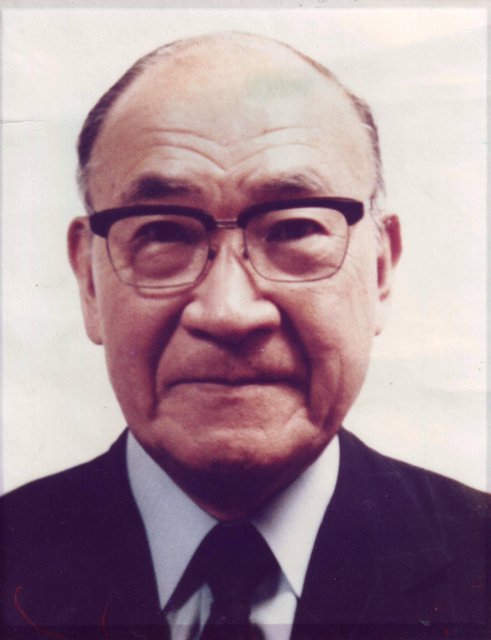
►As we shine light on the forthcoming 40th Anniversary of the Takayama Memorial at the Philippines-Japan Friendship Park at Plaza Dilao, Paco on Nov. 17, 2017 – and the 425th year of the establishment of Dilao as the Philippines’ first “Japantown” in 1592, one indispensable figure comes to mind: Japanese Ambassador Toshio Urabe (Manila, 1969-1974), the longest-serving Japanese ambassador to date.
(But Toshio should not to be confused for his illustrious son, Amb. Toshinao Urabe — who also served as Japanese ambassador to Manila, 2011-2014 — who was similarly cited for his efforts in enhancing bilateral relations between the Philippines and Japan. Toshinao was decorated with the Order of Sikatuna, rank of Datu [Gold Distinction], the highest possible decoration given to a non-head of state.)
Toshinao’s father, Amb. Toshio Urabe, had a formidable record: In 1953, Mr. Urabe first arrived in Manila as Counsellor of the Overseas Liaison Office and Chairman of the Technical Panel negotiating the Peace Treaty and Philippines-Japan Reparations Agreement — which was ratified by the Philippine Senate on July 23, 1956. (With diplomatic relations established that day, July 23 is celebrated by Presidential Proclamation as Philippines-Japan Friendship Day. For several years now, the entire month of July has been celebrated as Philippines-Japan Friendship Month.) As Deputy Director General of the Treaties Bureau, it was Mr. Urabe’s job to implement the Reparations Agreement in the spirit of friendship and mutual respect.
In 1969, he returned to Manila – this time, as Japan’s Ambassador, serving from 1969 to 1974. During his incumbency, the Philippines was able to secure a broad range of economic assistance from Japan, beginning with the funding of the 2,000-km. Philippines-Japan Friendship Highway (1969) which now straddles the archipelago from north to south.
Though Amb. Urabe had never heard of the Japanese Christian exile, Lord Takayama Ukon before – he insisted on historical documentation from Japan and extensive discussions with historical groups in Manila and Tokyo — it was under his stewardship that, across four centuries of checquered bilateral relations, Ukon was finally recognized as the only acceptable exemplar of Philippine-Japanese friendship and amity. ◘
Dr. ERNIE A. DE PEDRO
Managing Trustee
Lord Takayama Jubilee Foundation
JICC Director Ken Nakamura delivering his speech during the Takayama Memorial event.
The Challenge Facing Us
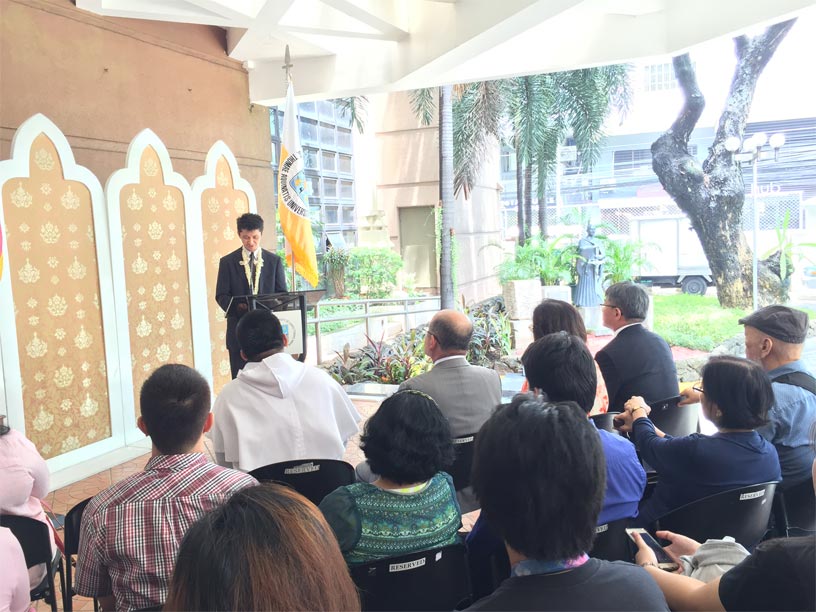
►Remarks of Hon. Ken Nakamura, Director of the Japan Information and Cultural Center, Manila (JICC), at the installation of the Toyono-cho granite marker at the Takayama Memorial at the Thomas Aquinas Research Complex (TARC), University of Santo Tomas (UST) on July 29, 2017 — at the sidelines of the Fourth Philippine Conference on New Evangelization (PCNE 4), July 28-30, 2017.
FIRST, I WOULD LIKE to thank the administration of the University of Santo Tomas and the representatives of Toyono-cho, Japan for organizing this important event and for inviting me to participate. It is a great pleasure and privilege for me to witness this momentous occasion, which honors the life of Blessed Justus Takayama Ukon.
Lord Takayama has lived through most of the “Sengoku jidai” (戦国時代) or the “Age of the Warring States” which was a dark period in Japanese history, characterized by huge and nearly never-ending political and social conflicts. To say that it was a dangerous time to be in is an understatement. Lord Takayama faced numerous life-threatening dilemmas, which reached their climax upon the rise of a “Shogun” or leader who completely banned the practice of Christianity and executed anyone who engaged in it.
Lord Takayama had two options then: to renounce his faith and perhaps to maintain his social standing or to uphold his beliefs and possibly lose everything. By now, we all know what he chose.
He left his own country because he deemed it necessary to stand up for what he believed in. It was a courageous choice that proved to be the right one. That was affirmed by the warm welcome that was extended to Lord Takayama in the Philippines upon his arrival.
At certain points in our lives, we too are faced with similarly crucial choices that could significantly influence our future. Japan and the Philippines, for instance, have such good relations today because our forefathers have been given choices and the choices they made helped build and nurture our diplomatic bonds. ◘
Dr. Ernie A. de Pedro
Managing Trustee
Lord Takayama Jubilee Foundation
In Western annals, the most celebrated voyage of people fleeing religious persecution is that of the Mayflower Pilgrims in September-November, 1620. The Mayflower has occupied a prominent spot in American tradition as a symbol of the indomitable English settlers’ quest to build “a beacon for Christians around the world” in a New World.
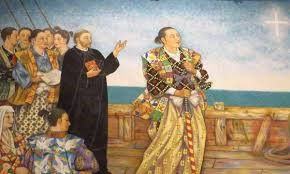
Yet Lord Takayama Ukon’s exile voyage to Manila in November-December 1614 antedated the Mayflower — by six years. Though half-a-world apart, the two voyages shared many uncanny similarities and parallels.
Takayama’s exile ship – actually a Portuguese-captained Chinese junk — left Japan with the consent of the Tokugawa Shogunate to bring Japanese Christians “too prominent to crucify” (and their families) to exile – and religious liberty — in Manila. Likewise, the “Mayflower” left England, with the permission of King James I, with Protestant refugees and migrants seeking to worship in freedom in a settlement they were going to build.
Takayama’s exile ship left Nagasaki, Japan with “300” Christian exiles – suffering one death (Fr. Antonio Francisco Critana, SJ) on board. The Mayflower left Plymouth, England with 102 passengers — suffering one death (William Butten) on board.
Takayama’s exile ship managed the Nagasaki-to-Manila voyage, which normally took 20 days — in 43 days, double the usual duration. The Mayflower navigated the Plymouth-to-Cape Cod voyage, which should have lasted 33 to 40-days – in 66 days, also double the duration.
Takayama’s exile ship suffered a broken main mast, disabling the ship (which was then already in Bataan waters, some “39 to 52 nautical miles” from Manila) from sailing further. Spanish Governor-General Juan de Silva had to send a Spanish man-of-war, partially propelled by sails, but powered mainly by rowers, to tow Takayama’s stricken ship to the Governor’s Landing (now the Postigo Gate) in Manila. The Mayflower similarly suffered a broken main beam amidships – which was repaired with metal braces and tools brought to build the Pilgrims’ new settlement.
In brief: Takayama’s exile ship left Nagasaki on Nov. 8, 1614 and arrived in Manila on Dec. 21, 1614. The Mayflower left Plymouth, England on Sept. 6, 1620 and anchored in Plymouth Rock on Nov. 11, 1620.
By Ernesto A. de Pedro
Managing Trustee
Lord Takayama Jubilee Foundation
When their patriarch, Lord Justo Takayama Ukon died on Feb. 3, 1615, the Spanish Governor General, Juan de Silva, was worried about the future of Takayama’s family who remained as houseguests of the Philippine Jesuits at their “Casa San Miguel” in Intramuros.
He offered a royal pension to the widow, Dona Justa Takayama. But she declined the offer. The family will be alright, she said. She had other plans.
Mrs. Justa Takayama, returned to Japan in the first semester of 1616 with her daughter, Lucia Yokoyama, and her eldest grandchild – a development reported on July 18, 1616 by the Jesuit Vice Provincial Jeronymo Rodriguez, SJ.
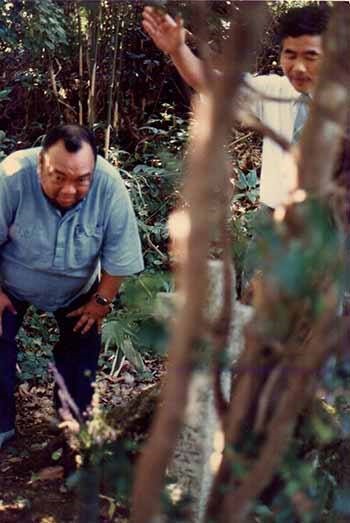
Dr. Ernesto de Pedro, lead Filipino promoter of the Canonization Cause of Ukon Takayama, visits the spot in Shika-machi, marked with a stone crosss, where finger-bone of Takayanma was buried in 1616. The relic was brought back to Japan by Dona Justa Takayama, who wanted a part of Ukon buried in Japan.
She had brought a finger bone of Ukon to be buried on home soil in Kanazawa. By tradition, the eldest son of the Takayama family in Kanazawa – there is an unbroken line to this day — is tasked to care for the memorial in a nearby forested area where a concrete cross has been erected. (Across the centuries, this cross/marker has not been savaged or defiled by any anti-Christians.)
Ukon’s daughter, Lucia Yokoyama, returned to her husband, Yokoyama Daizen Yasuharu (1590-1645), a general of the Maeda clan in Kanazawa after a 28-month separation. According to the Yokoyama family tree, Baron Yokoyama remarried in 1624 – this time, to a daughter of Imaeda Nimbu Naotsune — which indicates that by that year, Ukon’s daughter Lucia had passed away.
It appears that the four other Takayama grandchildren had joined the Japanese Christian community in San Miguel district, which was also a Jesuit parish.
Ambassador HASEKURA Rokuemon Tsunenaga (支倉六右衛門常長, 1571-1622), a retainer of Lord Date Masamune, daimyo of Sendai, who led the first Japanese embassy to Europe (1582-1590), stopped over in Manila from June 1618 to August 1620 on his return home to Japan. He recalls seeing a grandson of Takayama dressed as a foppish Spanish grandee. Instead of wearing traditional Japanese clothes, the young millennial preferred to don Spanish-style garments.
In a letter dated Oct. 6, 1621, Fr. Johannes Battista Porro, SJ, writes that Mrs. Takayama, using the name Rocuzaimon – (Rokuzayemon?) — had settled in far-away Oita Prefecture. Her other grandchildren returned to Japan in 1621 but preferred to proceed to Sakai City. This is the same year Manila Archbishop Miguel Garcia Serrano, OESA, reported to the king of Spain that there are “more than 1,500 [Japanese] Christians … in Santiago, and in the villages of Dilao [the first Japan town] and San Miguel [the Jesuit encomienda reserved for Japanese Christian exiles] — but this was not a fixed population “because the [Japanese] are a people who go to and fro” to Japan.
In 1802, the Takayama family in Oita Prefecture erected a memorial tombstone for Takayama Ukon at the Oita city cemetery. (Note that in 1802, Christianity was still officially proscribed with the death penalty. But nevertheless, the Takayama family proclaimed their descent from Takayama Ukon.) Eimei Takayama, a former mayor of Oita made the claim in an English pamphlet that was widely distributed in Manila during the 1937 International Eucharistic Congress.
Today it is known that there are descendants of Takayama Ukon in Kanazawa, Noto, Oita, Sakai – and in one case we know of, in Tokyo too. With the mobility of the Japanese population in the past 400 years, other Takayama descendants may be in other cities as well. During the Beatification Rites at Osaka in 2017, two Takayama descendants — from “near Kanazawa” – attended the religious event.
By Dr. Ernie A. De Pedro, Managing Trustee Lord Takayama Jubilee Foundation
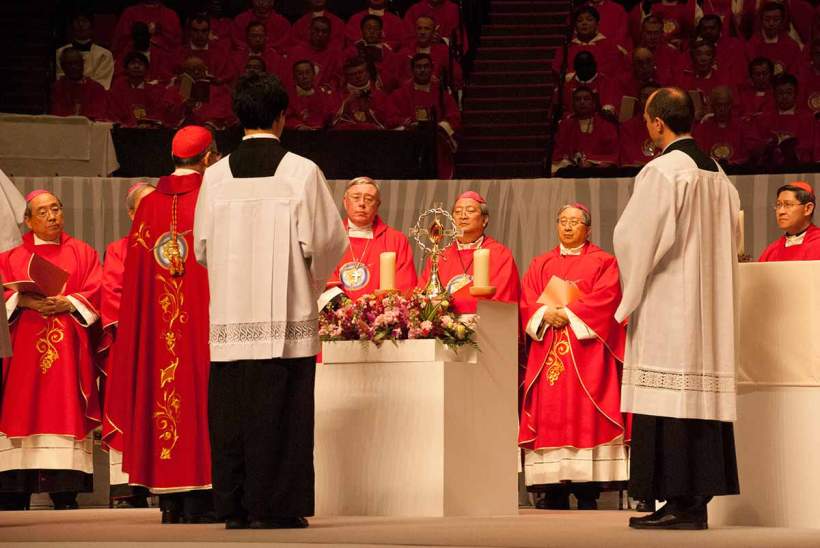
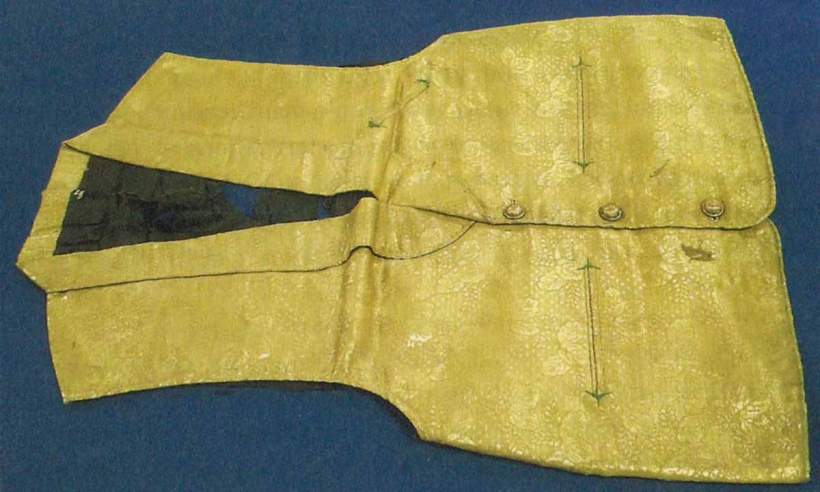
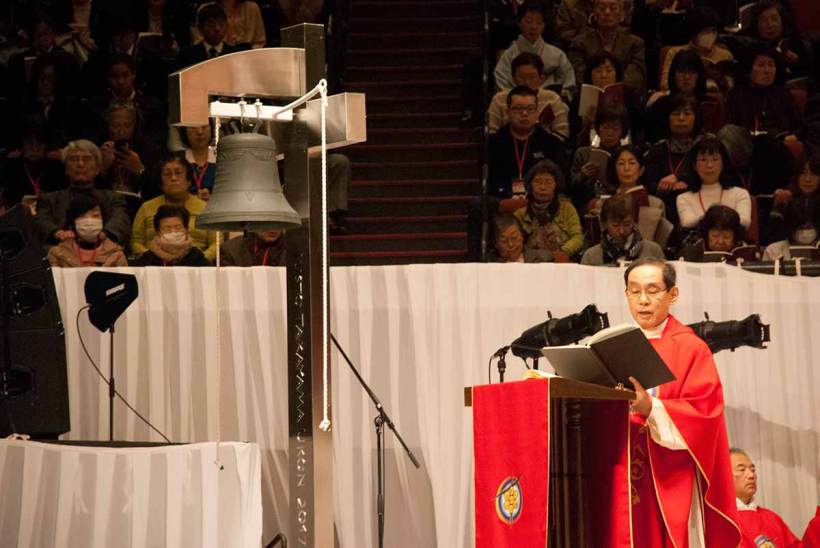
In front of the altar, a piece of fabric from Ukon’s vest was displayed as a sacred relic as Archbishop Takeo Okada of the Archdiocese of Tokyo made a formal plea for the beatification of Ukon.
Post-Beatification Notes
Hundreds of nuns from various religious women’s congregations from around the world were also present, but the CBCJ Secretariat did not have the actual count. They were also representatives from the Anglican, Lutheran and Methodist Churches.
Fr. Albert Fuyuki Hirabayashi, SJ, secretary of the CBCJ Committee for the Promotion of Saints, confirms there were some Buddhist monks too.
Two descendants of Takayama Ukon from “near Kanazawa” also attended.
The special liturgy was comprised of prayers and songs in different languages including Latin, English, Tagalog, Korean, Vietnamese and Italian. They were chosen to express the richness of the faith in the Roman Catholic Church, especially in Japan – which has a pantheon of 42 canonized Saints.
In a nod to the estimated 460,465 Filipinos residing in Japan, of whom some 396,000 are Catholics, the Tagalog song “Salamat sa Iyo” (Tanging Alay) was chosen as the offertory hymn.
During the same week, the NHK (National Television of Japan) dedicated a lot of broadcast time in their evening news prime time. The Lord Takayama Jubilee Foundation offered “Live Streaming” of the three-hour Beatification Ceremonies, which was shared with many requesting networks around the world. (The “Live Streaming” continues to be available in the Takayama Website’s Blog Section.)
With Cardinal Angelo Amato officiating at the celebrations, the Thanksgiving Mass in the Osaka Cathedral of Mother of God was celebrated on Wednesday (Feb. 8). Another Thanksgiving Mass was held on Thursday (Feb. 9) in Kanazawa (Carmelite Parish) where Blessed Justo spent his last 26 years in Japan before his exile in Manila. On Friday evening (Feb 10), the last large Thanksgiving Mass was celebrated at the St. Ignatius Church in Yotsuya, Tokyo.
At the sidelines of the Beatification Ceremonies, the British archbishop, Msgr. Paul Richard Gallagher, the Holy See’s Secretary for Relations with States (the third highest position in the Vatican), met with the Prime Minister of Japan, Shinzo Abe to celebrate the milestone event. ◘
Fr. Albert Fuyuki Hirabayashi, SJ, Sercretary of the CBCJ Committee for the Promotion of Saints
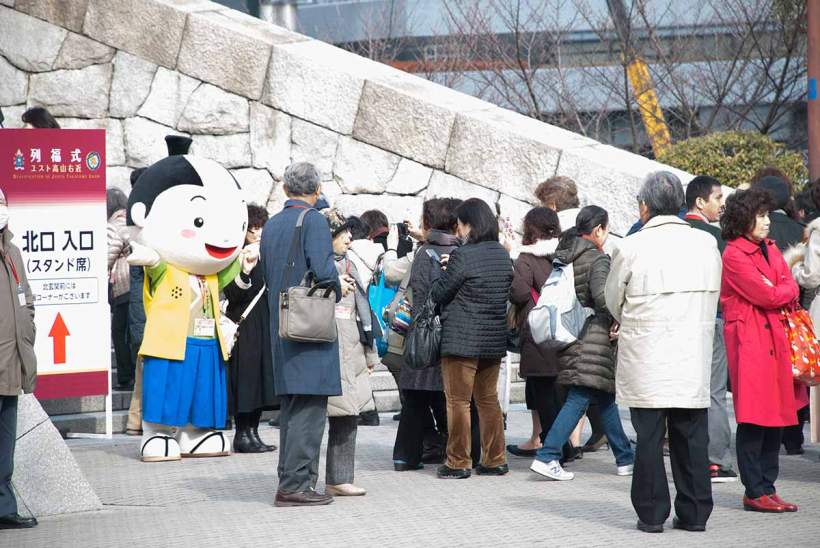
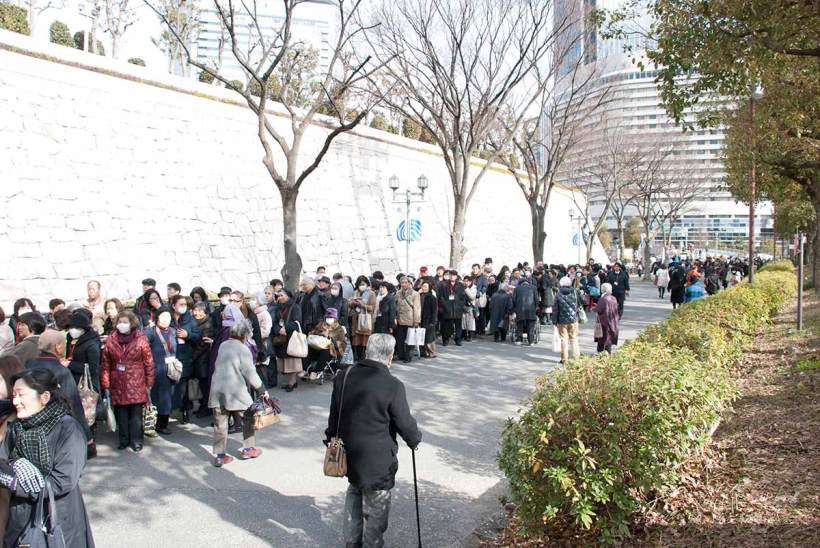
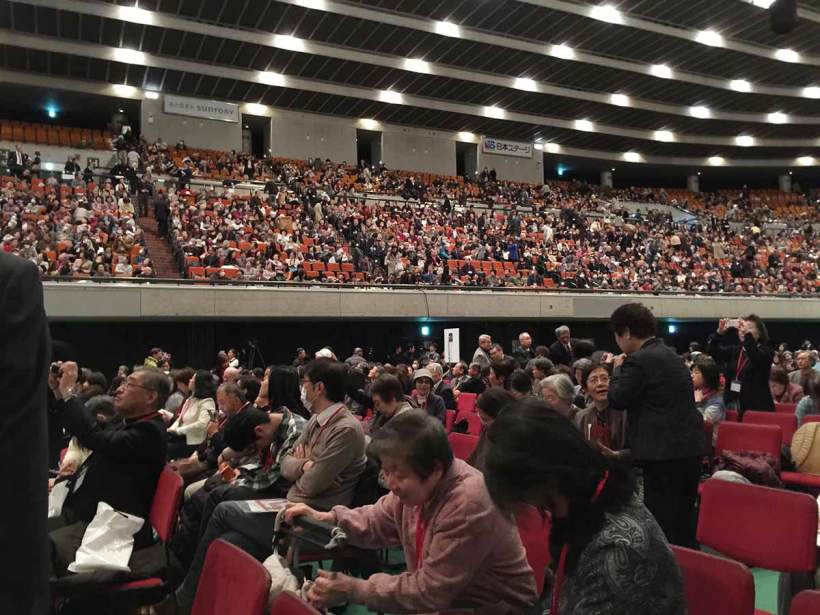
Catholic Online reported: “Over 12,000 people crowded a Catholic Church in Osaka, Japan.” The venue of the Beatification Ceremonies was not a church – but the Osaka-jo Hall, a multi-purpose concert hall with seating for 10,000 persons, with ticketed entry for audience control.
By Dr. Ernie A. De Pedro, Managing Trustee Lord Takayama Jubilee Foundation
►Justus Ukon TAKAYAMA is the standard Western way of writing the name of a Japanese Christian: Christian name, FIRST; Japanese given name, SECOND; and surname, LAST. Examples: Paul Yoshigoro TAGUCHI. Or Paul Yoshinao OTSUKA. Or Gracia Tama HOSOKAWA.
But other Japanese Catholics prefer their Christian name in the middle. Thus: Toru Albert NISHIMOTO. Or Iwao Daniel IKEGAMI.
A third style is preferred by the Church of Japan for Ukon: Justus TAKAYAMA Ukon. Takayama’s Christian name is Justus (Variants: Justin, Justy, Justino, Justiniano) — after the early Christian saint, St. Justin Martyr (100-165 AD).
It is Justus / Iustus in Latin; Justo in Spanish and Portuguese, and Giusto in Italian. In full: Justus TAKAYAMA Ukon.
Standard Japanese Usage: Surname First
In Japanese standard usage, it is TAKAYAMA Ukon – (高山 右近) – surname, FIRST.
“Ukon” was derived from the Heian era’s “Ukonoefu” (Lieutenant of the Right Division of Inner Palace Guards), which was among many obscure (and empty) court titles that was a fad among the samurai of that period. It was an honorific title that became an endearing first name — much like Filipino nickname “Erap” (for Pare). The use of ‘Ukon’ is akin to the Filipino endearment for beloved bosses: “Amo-Boss-Chief!” (In today’s lingo, simply “Bossing.”)
Other Earlier Names
In various stages of his life, Takayama used other names, as is the standard Japanese practice.
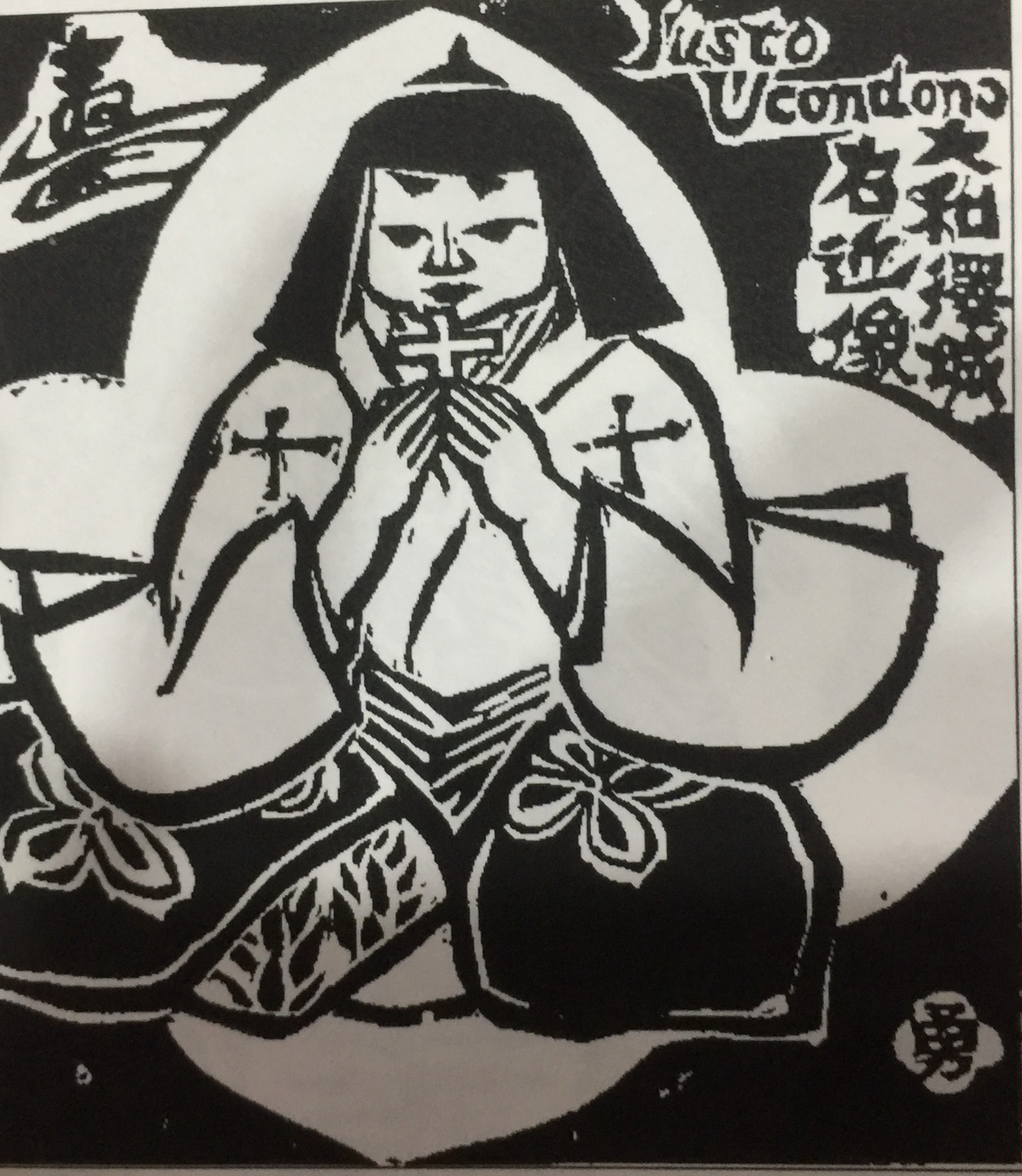
Wood-cut of the Takayama scion at 12, when he was baptized “Justo Takayama”
His childhood name was TAKAYAMA Hikogorō (彦五郎) – in missionary accounts, Hicogorodono. After his coming-of-age ceremony – (in Japan, age 20 marks a person’s transition from being a child to being an adult) – Takayama was given the adult name TAKAYAMA Shigetomo (重友).
Justo Ukon Takayama — as castle-lord of Takatsuki
When Justus became Lord of Takatsuki (in Settsu province) in 1573 (at age 21), he obtained the name TAKAYAMA Nagafusa – (“Naga” was a nod to the ruling hegemon Oda Nobunaga.) Because he affected the name Ukon, this became ‘TAKAYAMA Ukon-no-Tayû Nagafusa.’ As he was a Christian, it was now ‘Justus TAKAYAMA Ukon-no-Tayû Nagafusa.’ In short: ‘Justus TAKAYAMA Ukon.’
Daimyo Justo Ukon Takayama — at the head of his army whose tunics bore a large Cross
He signed ordinances as Daimyo of Takatsuki as ‘Takayama Ukon-no-suke Jusu’ — (at another time, Jushutsu). “Jusu” and “Jushutsu” are both Ukon’s own rendering of “Justus.”
When Lord Takayama refused to abjure his Christian religion, the Regent Hideyoshi (who was wary of any fealty to a foreign God) stripped him of his feudal domain in Akashi.
Another official name Lord Takayama used: ‘Takayama Ukon-no-tayû Yûshô Nyûdô Nambô.’ Signature in another document: ‘Takayama Ukon Nyudô Nambô.’ Short reference: ‘Takayama Nambô.’
Recognized as one of the ‘Top Seven’ teamasters in Japanese history, Takayama chose another name for that artistic aspect of his life –‘ Minami-no-Bô TAKAYAMAHida no-kami.’
As a tea-master, Takayama gained renown as ‘Minami-no-Bô TAKAYAMAHida no-kami.’
He was a prized pupil of Sen no Rikyū (d. 1591), who is considered the historical figure with the most profound influence on the development of Chanoyu. Ukon, one of the celebrated Rikyushichitetsu (Rikyu’s Seven), was credited with refining the tea ceremony into a serene celebration, with ritual movements “almost like a Mass.” The spirit of the art of tea – characterized by the qualities of harmony, reverence, purity, and tranquility — found in Ukon its Christian transfiguration.
Papal Breve to Justo Ucondono
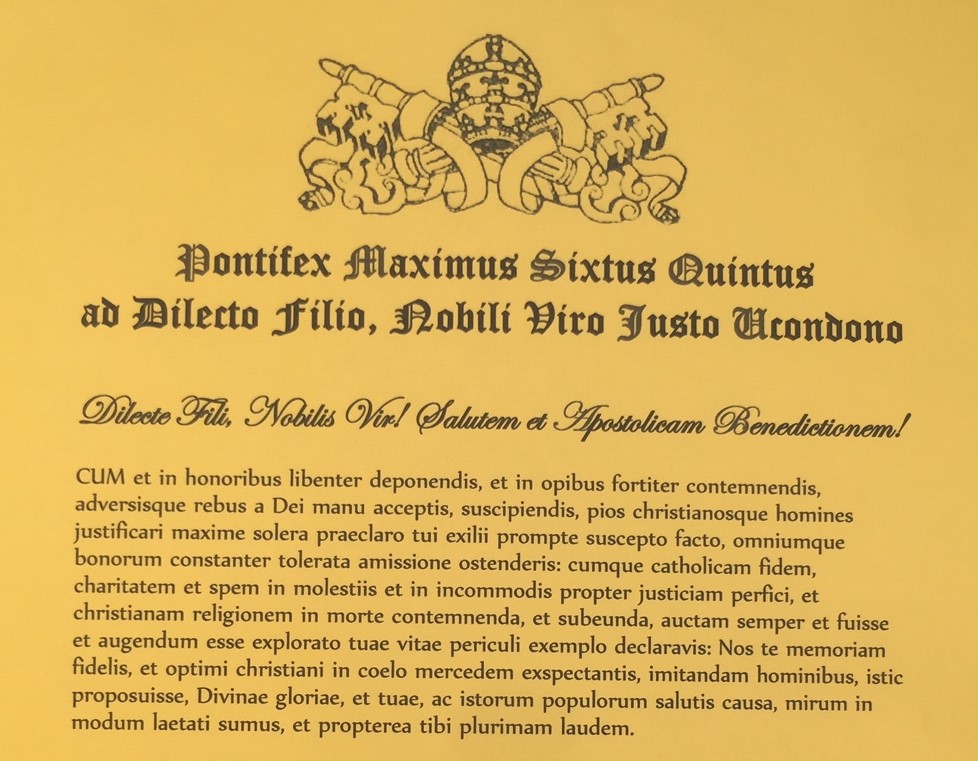
Pope Sixtus V (r. 1585-1590) on April 24, 1590, the Supreme Pontiff addresses him as “Justo Ucondono.”
In the “Papal Breve” signed by Pope Sixtus V (r. 1585-1590) on April 24, 1590, the Supreme Pontiff addresses him as “Justo Ucondono.”
In all Jesuit accounts, Takayama was simply known as “Justo Ucon-dono” – which was his name in Manila. (“Lord Takayama” was never used in Manila.)
Thus, Takayama is “Justo Ucondono” in Blair & Robertson (Vol. 28, p. 35). This is the 55-vol. work of Emma Helen Blair, James Alexander Robertson, Edward Gaylord Bourne, “The Philippine Islands, 1493-1898: explorations by early navigators, descriptions of the islands and their peoples, their history and records of the Catholic missions…” (A.H. Clark Company, 1903).
This is the image used in ‘estampitas’ — or prayer cards’ — distributed at the San Vicente de Paul Church at San Marcelino St., Ermita for a Takayama Memorial Mass on Sept. 20, 1942 by Japan’s ‘The Catholic Unit’ in World War II.#
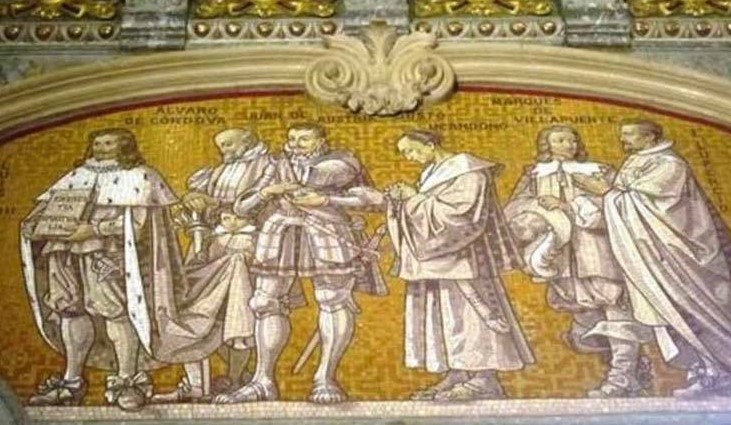
Mosaic at the vestibule of the Jesuit Church at Manresa, Spain — showing Ukon as one of six Catholic noblemen who underwent the Ignatian “Spiritual Exercises”
‘Dom Justo Ukondono’ was sometimes spelled Ucan-dono – as engraved in the Jesuit-commissioned Manresa Mosaic at the Church of Ignatius of Loyola at the Santa Cueva in Manresa, Spain. (The image used in the 1942 ‘estampita’ was derived from this Manresa mosaic.)
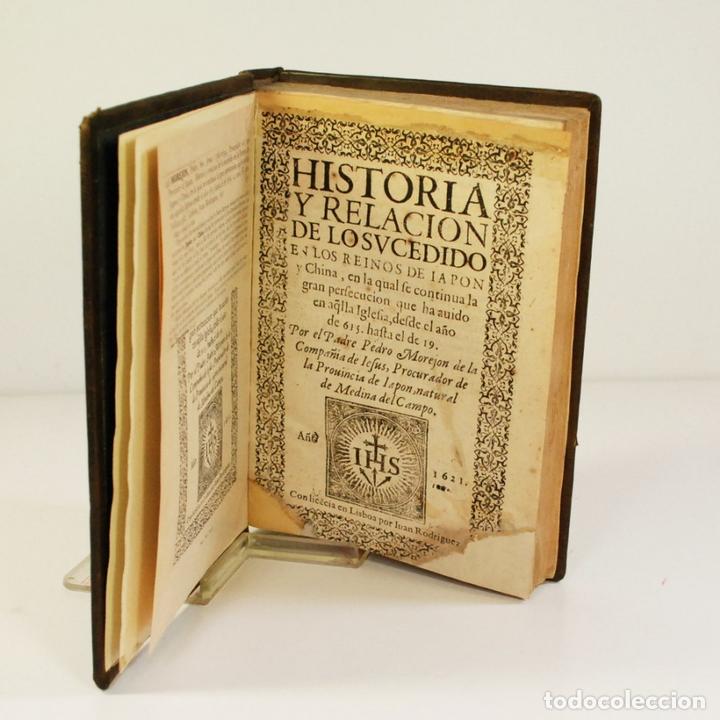
In the first printed biography of Takayama — Morejon, Pedro, 1562-1634?, “Breve relacion de la persecucion que huvo estos años contra iglesia de Japon” (Written in Spanish, and printed first at Mexico in the West Indies, the yeare of Christ M.DC.XVI – just one year after the death of Don Justo in Manila) — Padre Morejon, SJ, father-confessor of Don Justo who accompanied him to Manila, identified Lord Takayama as “Justo Tacayama [sic] Minaminobo.”
In a book on Japanese martyrs published in Rome in 1646 – “Fasciculus e Japonicis Floribus…” – (the earliest book that contains a depiction of Takayama), he was identified as “Dominus Iustus Vcondono Iappon” (Lord Justus Ukondono [of] Japan).
In adopting ‘Blessed Justus Takayama Ukon,’ it is bothersome to footnote to Filipino devotees that Ukon is not his last name: It is Takayama.
As there are no other celebrated Takayama figures in history, ‘Lord Takayama’ immediately evokes him. Thus ‘Blessed Takayama’ should be sufficient to identify him.
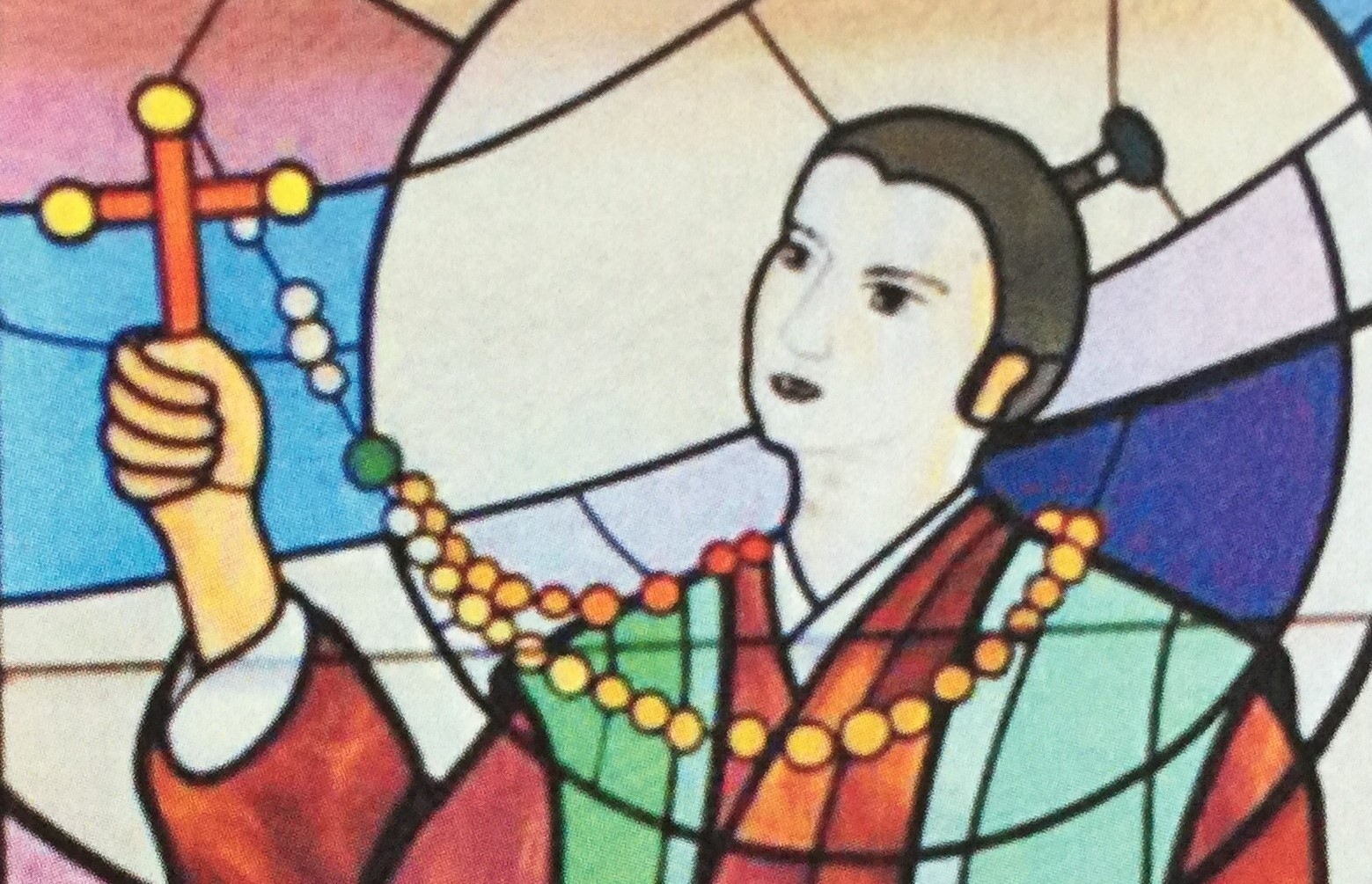
Stained-glass window at Shodoshima Island.
In light of Pope Francis ‘Decree of Martyrdom’ (Jan. 21, 2016) proclaiming Takayama as a “Japanese layman martyred in Manila” (making Manila a necessary identifier — to denote that, alone among Japan’s 436 venerated martyrs, he was ‘martyred’ outside Japan) — it makes sense to follow the Papal narrative by referring to him as “Blessed Takayama of Manila.”◘
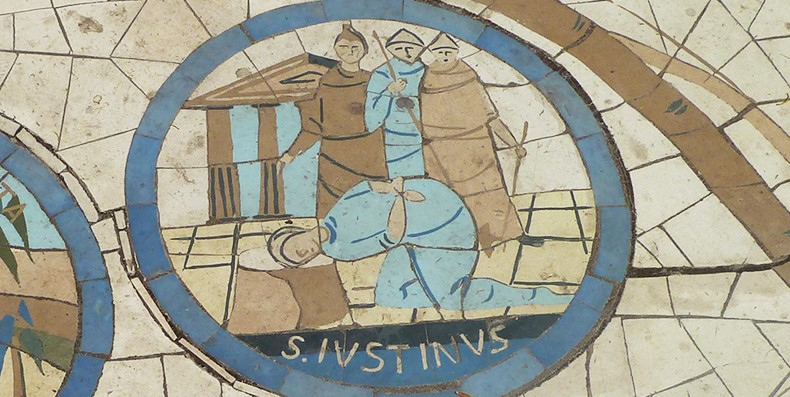
As Ukon Takayama was christened in June 1563 with the baptismal name “Justo” after St. Justin Martyr (c. 100 – 165), it may be presumed that Ukon was baptized on June 1, 1563 — feast day of St. Justin.




 Blessed Justo Takayama Ukon